
What's Happening?
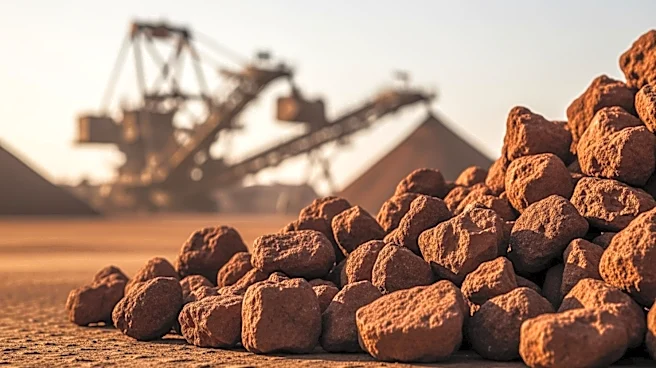
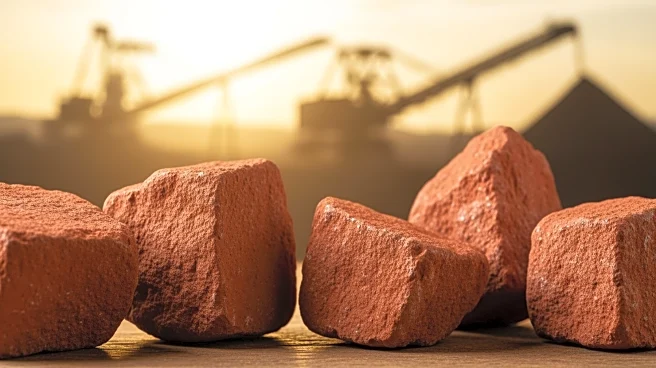
Brazil, the world's second-largest iron ore producer, is projected to see a 1.9% increase in its iron ore production in 2025, reaching 437.2 million tonnes. This growth is primarily driven by Vale, the country's largest iron ore producer, which accounted
for 76.9% of Brazil's output in 2025. The resumption of operations at the pelletizing Plant No. 4 and the ramp-up of the second concentrator at BHP's Samarco mine have also contributed to this increase. Vale's Capanema mine, which began operations in September 2025, is expected to add 15 million tonnes per annum to the company's 2026 production target. Further expansions, such as the Carajas Serra Sul S11D Project and the Vargem Grande Mining Complex, are anticipated to support continued growth.
Why It's Important?
The increase in Brazil's iron ore production is significant for the global iron ore market, as the country is a key supplier. The growth supports global demand and strengthens Brazil's position in the market. However, the industry faces challenges, including environmental concerns, infrastructure bottlenecks, and social conflicts, which have led to stricter scrutiny and operational disruptions. Despite these challenges, Brazil's vast mineral reserves and ongoing expansion initiatives position it well for long-term growth. The Brazilian government's efforts to update its mineral policy framework, including a public consultation to revise the National Mining Plan 2050, aim to ensure sustainable development in the sector.
What's Next?
Looking ahead, Brazil's iron ore production is expected to grow by 5.9% in 2026, reaching 462.9 million tonnes. This growth will be supported by planned increases at Vale and expansions at other major mines. Over the forecast period from 2026 to 2035, production is projected to grow at a compound annual growth rate of 3.0%, reaching 605.7 million tonnes by 2035. The Brazilian government is also working on establishing a National Policy for Critical and Strategic Minerals to stimulate domestic processing and secure supply chains, which could influence investment and production dynamics in the iron ore industry.
Beyond the Headlines
The development of Brazil's iron ore industry has broader implications, including potential impacts on environmental policies and social dynamics. The industry's expansion could lead to increased scrutiny and regulatory changes to address environmental and social concerns. Additionally, the focus on sustainable development and securing supply chains may drive innovation and investment in new technologies and processes, potentially reshaping the industry's landscape over the long term.