






What's Happening?
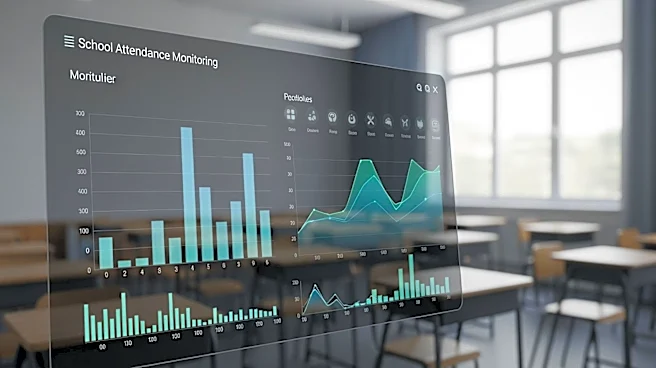
Ohio has launched a new online tool, attendance.ohio.gov, designed to help parents and taxpayers track student attendance in public schools. This initiative aims to address chronic absenteeism, which affects about 25% of students statewide. The dashboard
allows users to search attendance data by district and individual school buildings, providing weekly updates. However, participation is not mandatory, and some districts with high absenteeism rates, such as Lorain, Cleveland, Columbus, and Cincinnati, have not yet submitted their data. The tool was announced by Governor Mike DeWine, who emphasized the importance of timely data to address absenteeism issues. The dashboard is managed by the Department of Education and Workforce, led by Steve Dackin, who noted the challenge of integrating different data systems across districts.
Why It's Important?
The introduction of this dashboard is significant as it provides a more immediate and transparent view of student attendance, which is crucial for addressing educational challenges. Chronic absenteeism can severely impact student learning and overall school performance. By making attendance data readily available, the state aims to identify and address barriers that prevent students from attending school, such as transportation issues and health problems. This tool could lead to more targeted interventions and policies to improve attendance rates, ultimately enhancing educational outcomes. The initiative reflects a broader effort to use data-driven approaches to improve public education in Ohio.
What's Next?
The success of the dashboard will depend on the participation of all school districts. Efforts are underway to encourage more districts to submit their data, which will provide a comprehensive picture of absenteeism across the state. As more districts join, the state will be better equipped to develop strategies to combat absenteeism. Additionally, there may be discussions about expanding the tool to include private schools, depending on its effectiveness and interest from those institutions. The state will continue to monitor the dashboard's impact and make adjustments as needed to ensure it serves its intended purpose.