



What's Happening?
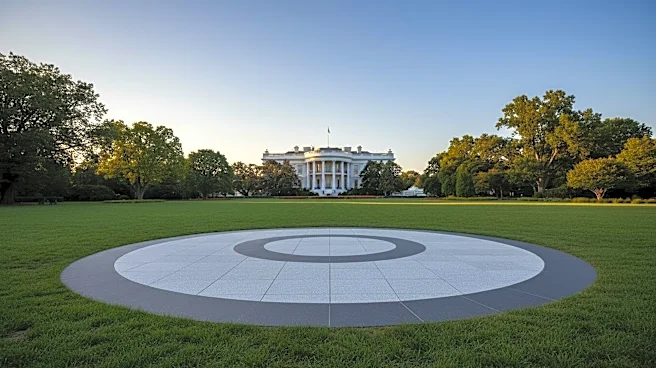
President Donald Trump announced the construction of a granite helipad on the White House lawn to accommodate new, more powerful presidential helicopters. The project, estimated to cost up to $6 million, is being privately funded by Sikorsky Aircraft,
a subsidiary of Lockheed Martin. The helipad is designed to handle the new VH-92A helicopters, which have been deemed too powerful to land on the White House lawn without causing damage. Construction crews have already begun work on the South Lawn, where a temporary arena was previously built for a UFC event celebrating Trump's 80th birthday. The helipad will feature the White House seal carved in granite and is part of Trump's broader efforts to remodel the White House.
Why It's Important?
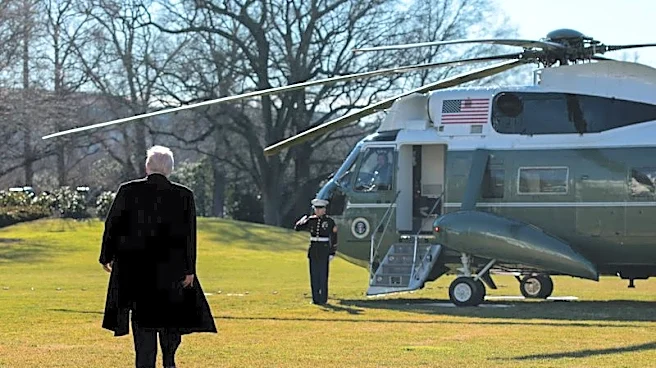
The construction of the helipad signifies a significant upgrade in presidential transportation, addressing the limitations of the older VH-3D helicopters that have been in service since 1978. The new VH-92A helicopters, delivered by Sikorsky in 2024, offer enhanced capabilities but have faced challenges landing on the White House lawn due to their powerful exhaust systems. This development reflects ongoing efforts to modernize presidential infrastructure and ensure the safety and efficiency of presidential travel. The project also highlights the collaboration between the government and private defense contractors in enhancing national security assets.
What's Next?
The completion of the helipad will allow for the retirement of the older VH-3D helicopters, marking a transition to the new fleet. The helipad may also serve additional purposes, such as hosting outdoor events and news conferences. As construction progresses, further details on the timeline and additional White House renovations may emerge. Stakeholders, including the military and Sikorsky, will continue to address any technical challenges associated with the new helicopters to ensure their full operational capability.
Beyond the Headlines
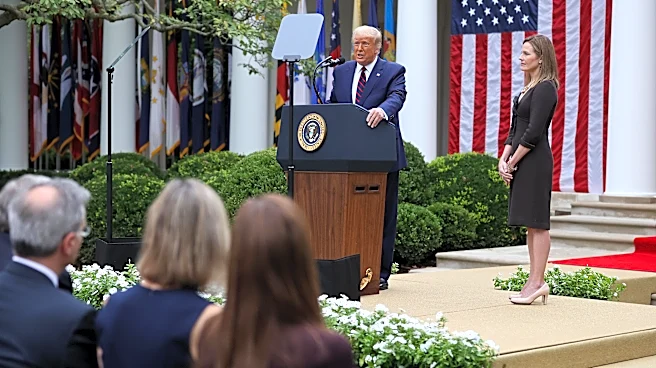
The helipad project is part of a series of renovations initiated by President Trump to personalize the White House, including changes to the Rose Garden and other areas. These efforts reflect a broader trend of presidents leaving their mark on the historic residence. The involvement of private funding in public infrastructure projects raises questions about the role of private entities in government operations and the potential implications for transparency and accountability.