





What's Happening?
California Governor Gavin Newsom has signed Senate Bill 894, known as the Wildfire Mitigation Affordability Act, into law. This bipartisan bill, authored by Senator Ben Allen, D-Pacific Palisades, establishes a state-backed, low-interest loan program.
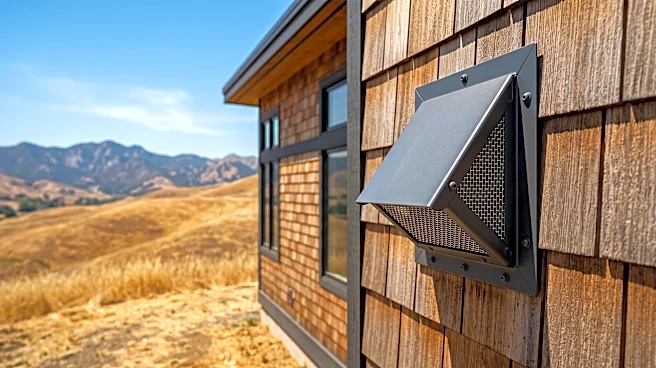
The program is designed to assist property owners in financing home hardening and defensible space improvements, which are crucial for mitigating wildfire risks. The California Wildfire Resilience Loan Program will be administered by the State Treasurer's Office. Senator Allen emphasized that the bill aims to make essential property upgrades more accessible financially, thereby reducing risk before wildfires occur and contributing to a more stable insurance market. The legislation passed with unanimous support from both sides of the aisle, reflecting a broad consensus on the urgency of addressing wildfire preparedness in California.
Why It's Important?
This legislation is critical for California, a state increasingly vulnerable to devastating wildfires. A recent UC Berkeley study highlighted that structures with home hardening and defensible space features are significantly more likely to survive wildfires. However, the cost of these upgrades has been a major barrier for many residents. By providing low-interest loans, SB 894 directly addresses this financial hurdle, making it more feasible for homeowners and businesses to implement necessary protections. This program is expected to enhance community safety, reduce property damage, and potentially alleviate the strain on the state's insurance market, which has seen rising premiums and reduced coverage options due to increased fire risk. The bill's model, based on California's successful GoGreen energy-finance platform, suggests a proven approach to facilitating costly but essential home improvements, aligning with the state's broader efforts to improve insurability and adapt to a changing climate.
What's Next?
The California Wildfire Resilience Loan Program will now be implemented by the State Treasurer's Office. Property owners in fire-prone regions will soon be able to apply for low-interest loans to fund home hardening and defensible space improvements. The success of this program will depend on its accessibility and the extent to which it encourages widespread adoption of mitigation measures. Stakeholders, including homeowners, insurance companies, and wildfire advocacy groups, will likely monitor the program's effectiveness in reducing wildfire damage and stabilizing the insurance market. The state may also explore further initiatives to support wildfire resilience, potentially expanding the scope or funding of such programs if SB 894 proves successful. Continued research into effective mitigation strategies and public education campaigns will also be crucial in conjunction with the financial assistance provided by this new law.
Beyond the Headlines
The passage of SB 894 underscores a significant shift in how California is approaching climate change adaptation and disaster preparedness. Rather than solely focusing on emergency response, the state is investing in proactive, preventative measures at the individual property level. This reflects a growing understanding that mitigating the impacts of climate change requires a multi-faceted approach, including financial incentives for resilience. The bipartisan support for the bill also highlights a rare area of consensus in state politics, driven by the undeniable and increasing threat of wildfires. This legislation could also influence insurance industry practices, potentially leading to more favorable rates for properties that have implemented these hardening measures. Ultimately, the program represents an investment not just in physical infrastructure, but in the long-term sustainability and safety of communities across California, fostering a culture of preparedness in the face of escalating environmental challenges.