





What's Happening?
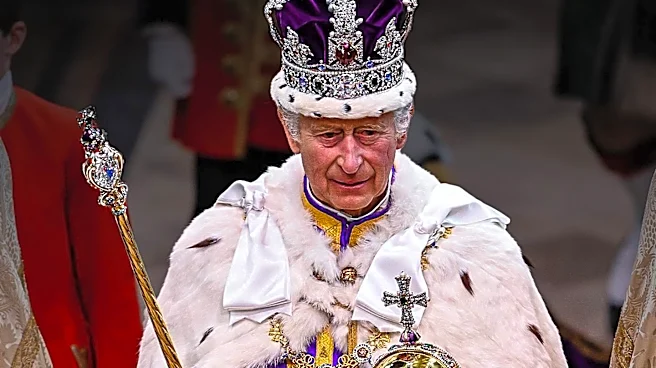
King Charles III has commenced his annual summer residency at Balmoral Castle in the Scottish Highlands. The monarch participated in a formal inspection of the Balaklava Company, 5th Battalion, The Royal Regiment of Scotland, accompanied by the regiment’s
pipe band. This event marks the official start of his summer break at the estate, a tradition for the British royal family since 1852. King Charles appeared in traditional Scottish attire, including a kilt, tweed jacket, and sporran, as he greeted troops and local residents. He also met Corporal Cruachan IV, the Shetland pony mascot of the Royal Regiment of Scotland. The King has already spent much of August in Scotland, engaging in various activities such as attending the Castle of Mey Games and visiting the Assynt Mountain Rescue team. This year's arrival ceremony also featured the re-establishment of the Balmoral Highlanders, a group that had been disbanded in 1936, with two newly appointed members present.
Why It's Important?
The annual summer stay at Balmoral Castle and the accompanying traditions underscore the continuity and historical significance of the British monarchy. King Charles III's adherence to these customs, including the formal inspection and the revival of the Balmoral Highlanders, demonstrates a commitment to preserving royal heritage and connecting with the military and local communities. Balmoral holds particular emotional significance as it was the place where Queen Elizabeth II spent her final days. The King's continued presence and engagement in Scotland, even during his private time, reinforces the monarchy's role in national life and its ties to different regions of the United Kingdom. The re-establishment of the Balmoral Highlanders, a group with roots in the 19th century, highlights a broader interest in restoring and maintaining historical traditions associated with the estate, reflecting a blend of personal sentiment and institutional duty.
What's Next?
King Charles III is expected to spend the coming weeks at Balmoral Castle, where members of the Royal Family traditionally join him for private time. This period allows for a break from official duties before the monarch resumes his full schedule in September. The newly revived Balmoral Highlanders are anticipated to participate in the Braemar Gathering later in September, marking another public appearance for the group. The King's continued engagement with local communities and his focus on preserving historical traditions suggest that similar initiatives and public appearances may occur throughout his summer stay. The informal setting of Balmoral also provides an opportunity for the King to host family members and potentially political figures, fostering both personal and official relationships away from the more formal settings of London.
Beyond the Headlines
The King's decision to revive the Balmoral Highlanders, a group disbanded nearly a century ago, speaks to a deeper commitment to cultural preservation and the symbolic power of tradition within the monarchy. This act is not merely a ceremonial gesture but reflects a conscious effort to connect the present-day monarchy with its historical roots and the unique heritage of the Scottish Highlands. It also subtly reinforces the idea of the monarch as a custodian of national identity and history. The personal touch, such as the King's continued hands-on involvement with the gardens at Highgrove House, even after his ascension, suggests a desire to maintain a degree of normalcy and personal passion amidst the immense responsibilities of his role. This blend of personal interest and public duty helps to humanize the monarch while upholding the gravitas of the institution.