




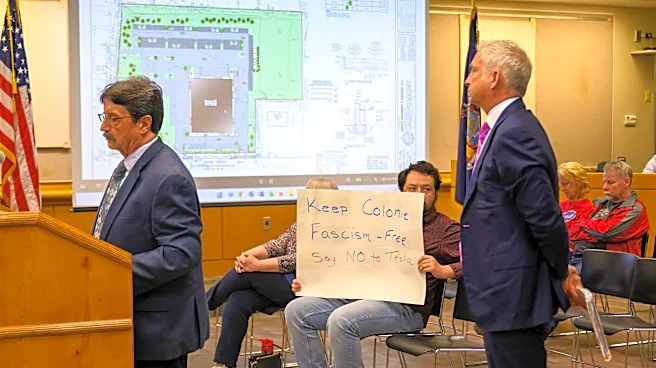
What's Happening?
Fairhaven Town Meeting members voted 92-77 to ban the future use of automated license plate readers (ALPRs), specifically targeting Flock Safety cameras used by the Fairhaven Police Department. This citizen-petitioned bylaw, approved on Tuesday night,
would prevent the renewal of existing contracts and mandate the removal of the six current cameras within 30 days of their contract expiration in September 2028. However, the ban is not immediately effective; it must first be reviewed by the Massachusetts Attorney General's Office to ensure compliance with state law and the Massachusetts Constitution. Town Counsel Heather White has raised concerns about the town's legal authority to prohibit police from using already acquired equipment, citing the Strong Police Chief statute, which grants police chiefs authority over departmental property. State Rep. Mark Sylvia noted that Fairhaven would be the first town to adopt such a bylaw, setting a precedent.
Why It's Important?
This vote is significant as it represents a direct community challenge to police surveillance technology and could establish a precedent for other municipalities in Massachusetts and beyond. The debate in Fairhaven highlights the tension between public safety concerns, as articulated by Police Chief Daniel Dorgan who cited ALPRs' role in solving crimes, and privacy concerns raised by residents regarding constant vehicle tracking and potential for abuse. The outcome of the Attorney General's review will determine the extent of local control over police technology and could clarify the legal boundaries between municipal bylaws and state statutes governing police authority. If upheld, it could empower other communities to enact similar bans, leading to a fragmented approach to law enforcement technology across the state. Conversely, if rejected, it would reinforce the authority of police departments to deploy such tools despite local opposition.
What's Next?
The proposed bylaw will now be submitted to the Massachusetts Attorney General's Office for review, a process that typically takes up to 90 days. The Attorney General will determine whether the bylaw complies with state law and the Massachusetts Constitution, with potential outcomes including approval, rejection, or partial enforceability. Fairhaven Police Chief Daniel Dorgan has indicated he will await the Attorney General's decision. If the bylaw is approved, it would prohibit the town from purchasing, installing, or operating new ALPR systems and renewing existing contracts, leading to the eventual removal of the current Flock Safety cameras by September 2028. The legal questions surrounding the town's authority versus the police chief's statutory powers will likely be central to the Attorney General's assessment, and potentially to future legal challenges if the bylaw is approved.
Beyond the Headlines
The Fairhaven vote delves into deeper societal questions about surveillance in a democratic society, the balance between security and privacy, and the evolving role of technology in law enforcement. The debate revealed concerns about data sharing with other agencies, the potential for misuse of data, and the accuracy of police record-keeping, particularly in light of past findings of mislabeled searches. This local action reflects a growing national conversation about the oversight and accountability of surveillance technologies like ALPRs, which collect vast amounts of data on ordinary citizens. The precedent-setting nature of Fairhaven's vote could inspire similar movements in other communities grappling with the ethical and civil liberties implications of pervasive surveillance. It also underscores the importance of local governance in shaping technology policy and the ongoing struggle to define the appropriate limits of state power in the digital age.