




What's Happening?
Officials from the World Health Organization (WHO) are currently meeting to assess whether to revoke the United States' measles-free status. This evaluation comes as the number of measles cases in the U.S. has surpassed 5,000. The significant increase
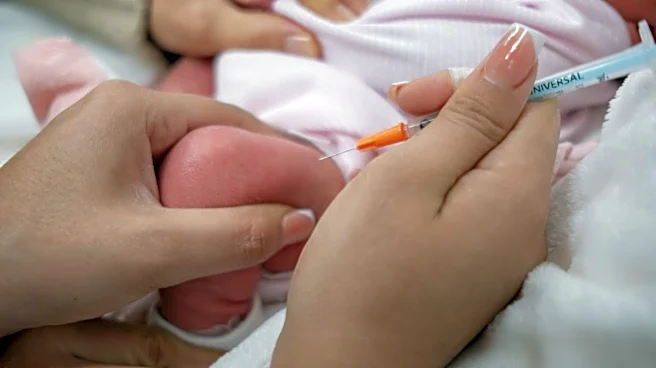
in cases is attributed to a decline in the administration of Measles, Mumps, and Rubella (MMR) vaccines. The U.S. had previously achieved measles elimination, a status indicating the absence of continuous disease transmission for at least 12 months. The current surge in infections raises concerns about the re-establishment of endemic measles transmission within the country, prompting the WHO's review.
Why It's Important?
The potential revocation of the U.S.'s measles-free status by the WHO carries significant implications for public health and international travel. Losing this status would signal a major setback in disease control efforts and could lead to increased public health advisories and stricter travel requirements for U.S. citizens in some countries. Domestically, it highlights a critical challenge in maintaining herd immunity due to vaccine hesitancy and declining vaccination rates. This situation could strain healthcare systems, particularly in areas with lower vaccination coverage, and increase the risk of outbreaks in vulnerable populations, including infants too young to be vaccinated and individuals with compromised immune systems. The re-emergence of measles, a highly contagious disease, could also divert resources from other public health initiatives.
What's Next?
The WHO officials' meeting will determine the immediate future of the U.S.'s measles-free status. A decision to revoke this status would likely trigger a series of public health responses, including intensified vaccination campaigns and enhanced surveillance measures across the U.S. Health authorities would need to address the underlying causes of vaccine hesitancy and work to rebuild public trust in immunization programs. Internationally, the U.S. might face increased scrutiny regarding its public health protocols, potentially impacting travel and trade. The outcome of this evaluation will be closely watched by global health organizations and national governments as they assess their own disease prevention strategies.
Beyond the Headlines
The current measles situation in the U.S. underscores broader societal challenges related to public health communication, misinformation, and individual liberties versus collective well-being. The decline in MMR vaccination rates reflects a growing trend of vaccine hesitancy, often fueled by unverified information circulating on social media and other platforms. This development highlights the ethical dilemma of balancing personal choice with the imperative to protect public health through herd immunity. The potential loss of measles-free status could serve as a stark reminder of the fragility of public health achievements and the continuous effort required to maintain them, prompting a re-evaluation of strategies to combat vaccine misinformation and promote evidence-based health practices.