






What's Happening?
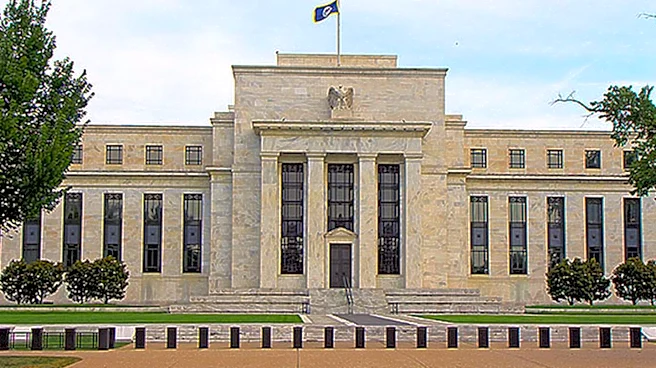
The U.S. Federal Reserve has upgraded its assessment of the U.S. economy, stating that economic activity is now 'expanding at a strong pace.' This marks an increase from its previous assessment of 'solid pace' in September. The Federal Open Market Committee
(FOMC) noted that domestic spending remains resilient, productivity growth is strong, and capital investment is robust, despite elevated uncertainty due to geopolitical developments. Job gains have kept pace with labor force growth, and the unemployment rate has shown little change. The Fed maintained its benchmark interest rate at 3.75%–4.00% per year, though two of the twelve FOMC members dissented, advocating for a 0.25-percentage-point rate hike. This decision comes as inflationary pressures persist, and consumer spending and business investment remain steady.
Why It's Important?
This upgraded assessment from the Federal Reserve signals confidence in the underlying strength of the U.S. economy, which could influence market sentiment and investment decisions. The acknowledgment of strong productivity growth and robust capital investment suggests a healthy business environment, potentially encouraging further corporate expansion and job creation. However, the persistence of elevated inflation, coupled with the dissent from some FOMC members for a rate hike, highlights an ongoing debate within the central bank regarding the appropriate monetary policy. This situation could lead to continued speculation about future interest rate adjustments, impacting borrowing costs for consumers and businesses, and potentially influencing the trajectory of economic growth and inflation control efforts.
What's Next?
The Federal Reserve's decision to hold interest rates steady, despite some calls for a hike, indicates a cautious approach as it monitors economic data. The FOMC will continue to accumulate more information to determine the appropriate policy stance to achieve its 2 percent inflation goal. Future monetary policy decisions will likely hinge on upcoming economic indicators, particularly inflation reports and employment figures. The possibility of further rate hikes remains on the table, especially if inflationary pressures do not subside as expected. This ongoing uncertainty could lead to continued volatility in financial markets as investors anticipate the Fed's next moves, which will have direct implications for lending rates, consumer spending, and overall economic stability.
Beyond the Headlines
The Federal Reserve's balancing act between fostering economic growth and controlling inflation has broader implications for the U.S. economy. The resilience of domestic spending and robust capital investment, even amidst geopolitical uncertainties, suggests a fundamental strength that could underpin sustained economic activity. However, the debate within the FOMC regarding interest rates underscores the challenge of navigating a complex economic landscape where inflation remains elevated. The long-term impact of current policies will depend on how effectively the Fed can manage these competing objectives, potentially influencing the purchasing power of consumers, the profitability of businesses, and the overall stability of the financial system. The focus on productivity growth and capital investment also points to structural shifts that could enhance the economy's capacity for sustained, non-inflationary growth.