







What's Happening?
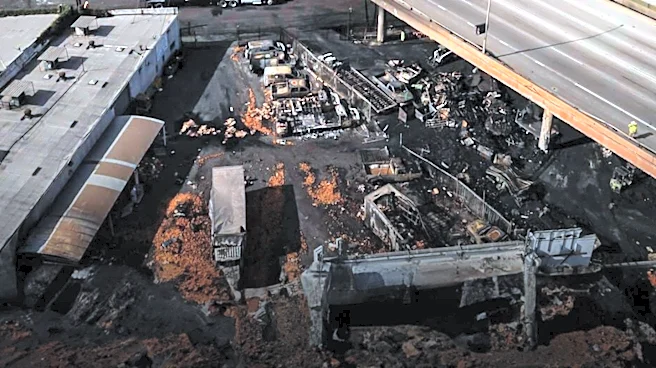
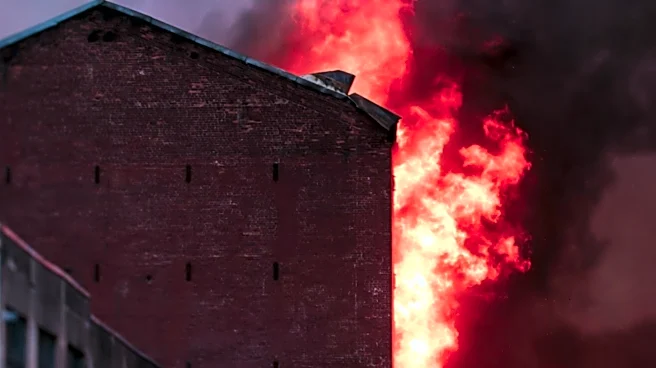
A fire at the Lineage refrigerated warehouse in Boyle Heights, Los Angeles, has resulted in extremely high levels of smoke and soot pollution, surpassing previous records from the 2025 Los Angeles County fires. The blaze, which began on June 17, 2026,
led to hazardous air quality levels, with a temporary monitoring station recording 755 micrograms per cubic meter of fine particles. This pollution has caused a surge in hospital visits due to respiratory issues. Despite multiple agencies conducting air quality tests, there are gaps in monitoring for certain toxic gases, leaving residents uncertain about the chemicals they were exposed to. The fire burned materials such as insulation foam, solar panels, and refrigerants, raising concerns about the potential health impacts of the emitted pollutants.
Why It's Important?
The incident highlights significant public health concerns related to air quality and the effectiveness of current monitoring systems. The high levels of fine particulate matter, known as PM 2.5, pose serious health risks, particularly for vulnerable populations such as children and the elderly. The lack of comprehensive data on the specific toxic substances released during the fire underscores the need for improved air quality monitoring and transparency from public agencies. This event also raises questions about the preparedness of local authorities to handle similar environmental disasters in the future, emphasizing the importance of robust emergency response plans and public communication strategies.
What's Next?
Local officials are focusing on addressing the odors from decomposing food in the warehouse, which could release hydrogen sulfide, a toxic gas. Contractors are working to remove the rotting food and are using deodorizing methods to minimize the impact on nearby residents. The South Coast Air Quality Management District continues to encourage residents to report any odors. Meanwhile, there is a call for better air monitoring systems to ensure accurate and timely information is available during such environmental crises. Public agencies may face increased scrutiny and pressure to enhance their monitoring capabilities and provide clearer communication to the public.