





What's Happening?
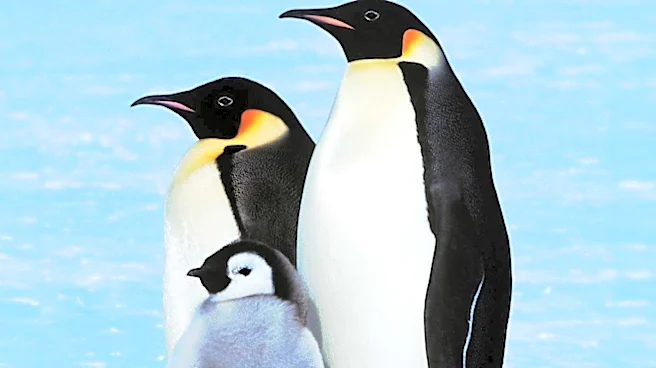
A study by the Woods Hole Oceanographic Institution (WHOI), published on November 17, 2026, in Biological Conservation, utilized satellite tags on 48 juvenile emperor penguins from three Antarctic colonies. The research tracked these penguins during their
first year at sea, revealing that they consistently followed similar routes across the Southern Ocean. A significant finding was that portions of these predictable migration paths intersect with areas where industrial krill fishing operations occur. Specifically, juveniles from the Jason Peninsula colony spent over 60% of their time in recently fished zones during February and March. The study, co-led by France's CNRS and the Centre Scientifique de Monaco, highlighted that current Antarctic marine protected areas primarily focus on breeding colonies, leaving the open ocean, crucial for juvenile penguins, less protected. This research marks the first time juveniles from Snow Hill Island and Jason Peninsula have been tracked, adding to three years of data from Atka Bay.
Why It's Important?
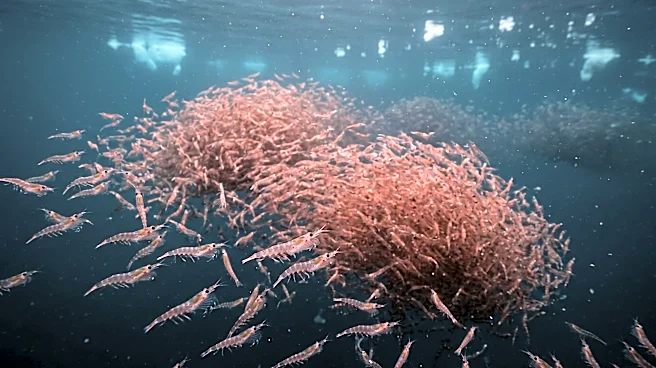
This research is important because it highlights a potential conflict between industrial fishing practices and the survival of a vulnerable species. Emperor penguins rely heavily on krill as a primary food source, and the overlap between their foraging grounds and fishing zones raises concerns about food availability for these young birds. The study suggests that current conservation strategies, which largely protect breeding colonies, may be insufficient to safeguard juvenile penguins during a critical developmental stage. If krill populations are depleted in these shared areas, it could lead to reduced survival rates for juvenile penguins, impacting the overall health and stability of emperor penguin populations. The findings underscore the need for a more comprehensive approach to marine conservation that considers the full life cycle and migratory patterns of Antarctic wildlife, especially in the face of ongoing industrial activities.
What's Next?
The findings from this study are likely to fuel discussions among conservation organizations, scientific bodies, and international regulatory agencies regarding the management of Antarctic krill fisheries. There may be calls for the expansion or re-evaluation of marine protected areas to include critical foraging and migratory routes for juvenile emperor penguins. Future research could focus on quantifying the direct impact of krill fishing on penguin populations and krill availability in these specific overlap zones. Stakeholders involved in the krill fishing industry may face increased pressure to adopt more sustainable practices or to adjust fishing locations and seasons to minimize ecological impact. Policy discussions within bodies like the Commission for the Conservation of Antarctic Marine Living Resources (CCAMLR) could be influenced by this data, potentially leading to new regulations or stricter enforcement of existing ones to protect vulnerable marine life.
Beyond the Headlines
Beyond the immediate implications for emperor penguins, this study sheds light on the broader challenges of managing shared marine resources in a rapidly changing environment. It underscores the interconnectedness of the Antarctic ecosystem, where the health of krill populations directly affects apex predators like penguins and whales. The research also highlights a common oversight in conservation planning: focusing solely on breeding grounds while neglecting crucial juvenile habitats. This oversight could be a systemic issue across various species and ecosystems, suggesting a need for more holistic conservation strategies globally. Furthermore, the study implicitly raises ethical questions about the balance between economic interests (krill fishing for supplements and aquaculture) and ecological preservation, particularly in a region as ecologically sensitive as Antarctica. It emphasizes the importance of scientific data in informing policy decisions that aim to achieve sustainable coexistence between human activities and wildlife.