






What's Happening?
NASA's Nancy Grace Roman Space Telescope is in the final stages of preparation for its upcoming launch, scheduled for August 30, 2026. Currently housed at the Kennedy Space Center in Florida, the telescope recently arrived from NASA's Goddard Space Flight
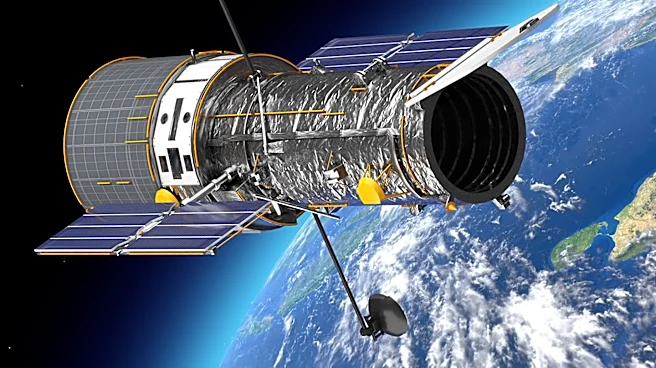
Center, where it was assembled and tested. The Roman Space Telescope is set to become a flagship mission for NASA, with a field of view 100 times larger than the Hubble Space Telescope. It aims to explore dark matter, dark energy, and capture images of exoplanets using its advanced Coronagraph Instrument. The mission is named after Nancy Grace Roman, NASA's first chief of astronomy, who significantly contributed to the understanding of the universe.
Why It's Important?
The Roman Space Telescope represents a significant advancement in astronomical research, offering unprecedented views of the universe. Its ability to study dark matter and dark energy could provide critical insights into the fundamental forces shaping the cosmos. The telescope's capacity to directly image exoplanets will enhance the search for potentially habitable worlds beyond our solar system. This mission is expected to build on the legacy of the Hubble Space Telescope, providing data that could lead to new discoveries about the universe's structure and evolution. The Roman Space Telescope's findings could have profound implications for our understanding of cosmology and the potential for life elsewhere in the universe.