







What's Happening?
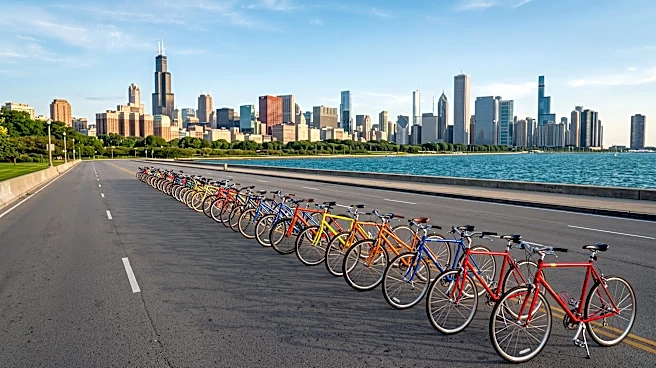
Thousands of cyclists participated in the 25th annual Bike the Drive event in Chicago, which allowed them to legally bike 30 miles of DuSable Lake Shore Drive without car traffic. This yearly event, a fundraiser for the Active Transportation Alliance,
highlights the potential for safer and more accessible urban cycling. Participants, including long-time riders like Lakisha Tanner and Mante Eckert, expressed enjoyment of the car-free experience and advocated for permanent infrastructure changes to make Chicago's streets safer for pedestrians and cyclists. John Draughon, another participant, is even developing a YouTube channel, 'Zane on the Go,' to promote urban mobility and reduce car dependency. The event serves as a demonstration of how urban spaces could be re-envisioned to prioritize active transportation.
Why It's Important?
The Bike the Drive event underscores a growing movement in U.S. cities to re-evaluate urban planning and transportation infrastructure. The advocacy for safer roads for cyclists and pedestrians reflects a broader societal shift towards sustainable and active modes of transport, which can have significant impacts on public health, environmental quality, and urban livability. Increased cycling and walking can reduce traffic congestion, lower carbon emissions, and improve air quality, contributing to healthier communities. Economically, cities that invest in bike-friendly infrastructure can attract residents and businesses seeking a higher quality of life, potentially boosting local economies. However, implementing such changes often faces challenges related to existing infrastructure, funding, and resistance from car-centric commuters, highlighting a critical policy debate in urban development.
What's Next?
City transportation officials in Chicago have indicated plans to add more bike lanes and neighborhood greenways, aiming to make streets less car-centric. Advocates are pushing for these principles to be applied to the ongoing redesign of the northern section of DuSable Lake Shore Drive, which was part of the Bike the Drive route. While current tentative plans for the highway redesign largely maintain its existing eight-lane structure, proponents of active transportation are urging planners to consider dedicated bus lanes and other features that would reduce its driver-focused design. The Active Transportation Alliance will likely continue its lobbying efforts, and public engagement around these urban planning decisions is expected to intensify as the redesign progresses, potentially influencing future infrastructure projects in Chicago and other major U.S. cities.
Beyond the Headlines
The annual Bike the Drive event in Chicago transcends a mere recreational activity; it symbolizes a deeper cultural and ethical discussion about urban space allocation and environmental responsibility. The desire for car-free zones and safer cycling routes reflects a growing public consciousness regarding the environmental impact of vehicle dependency and the health benefits of active lifestyles. This movement challenges the long-standing paradigm of car-centric urban planning, prompting questions about equitable access to public spaces and the prioritization of community well-being over vehicular throughput. The event also highlights the power of collective action in advocating for policy changes, demonstrating how temporary reconfigurations of urban infrastructure can inspire long-term visions for more sustainable and human-centered cities across the U.S.