



What's Happening?
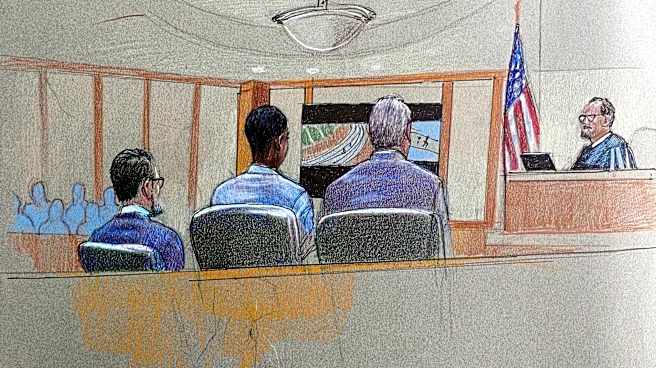
Karmelo Anthony's lawyer is requesting a new trial following his conviction and 35-year prison sentence for the fatal stabbing of 17-year-old Austin Metcalf at a high school track meet. The defense argues that the original trial was marred by errors,
including an off-the-record agreement between legal teams to withhold certain evidence. Prosecutor Bill Wirskye confirmed that both sides agreed to hold back information that risked inflaming racial tensions and death threats surrounding the case. This included details such as Anthony's text fantasizing about stabbing someone and Metcalf's history of fighting and using racist language. Defense attorney Russell Wilson, who did not represent Anthony at the criminal trial, stated that the original judge allowed a 'shadow docket' that shielded character information about both sides, with 'everything done off the record.' Anthony, who is Black, and Metcalf, who was white, were at the center of a case that garnered national attention and amplified racial tensions on social media.
Why It's Important?
This case highlights critical issues within the U.S. justice system, particularly concerning transparency, racial bias, and the right to a fair trial. The revelation of an off-the-record agreement to withhold evidence, even if intended to de-escalate racial tensions, raises serious questions about due process and the integrity of judicial proceedings. Such agreements can obscure crucial context for jurors, potentially leading to an incomplete understanding of the events and motivations involved. The case also underscores the pervasive influence of social media in shaping public perception and intensifying racial narratives around criminal cases, which can inadvertently impact legal strategies. For the families involved, the ongoing legal battle prolongs their suffering and delays a definitive sense of justice. The outcome of the retrial request could set a precedent for how courts manage sensitive information in racially charged cases and the extent to which judicial discretion can override full disclosure of evidence.
What's Next?
The hearing on Anthony's retrial request is set to continue, with a new judge, Michael Chitty, assigned to consider the motion after the original judge was removed. Judge Chitty will determine whether the errors and the off-the-record agreement warrant a new trial. If a new trial is granted, it would mean a complete re-examination of the evidence, potentially including the previously withheld character information about both Anthony and Metcalf. This could significantly alter the narrative presented to a new jury. Regardless of the judge's decision, the case will likely continue to be a focal point for discussions on racial justice, judicial transparency, and the challenges of conducting fair trials in an era of heightened social and political polarization. The legal teams will prepare for either an appeal or a new trial, depending on the ruling.
Beyond the Headlines
The Karmelo Anthony case delves into the complex interplay of race, justice, and public perception in America. The decision by legal teams to withhold evidence to 'turn down the temperature' on racial tensions, while perhaps well-intentioned, exposes a fundamental tension between maintaining public order and ensuring a transparent legal process. It raises questions about whether justice can truly be served when information is deliberately kept from the jury, especially when that information might provide crucial context for understanding the actions of the accused and the victim. The case also reflects the broader societal challenge of confronting racial biases within the justice system and the media's role in amplifying or mitigating these biases. The 'shadow docket' described by the defense attorney suggests a systemic issue where informal agreements can bypass formal judicial oversight, potentially undermining the principles of open justice. This situation calls for a deeper examination of judicial practices and the ethical responsibilities of all parties involved in ensuring that justice is not only done but is seen to be done, without compromise.