



What's Happening?
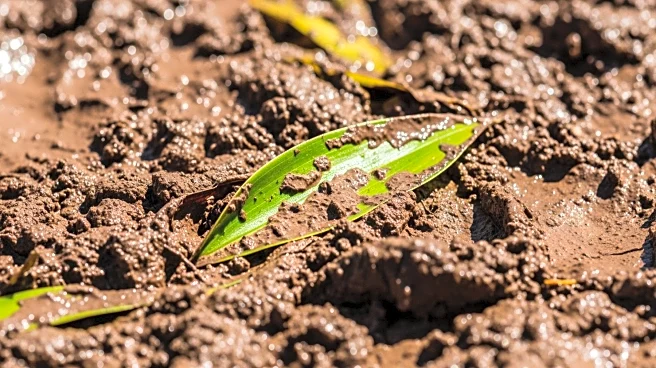
In Paraty, Brazil, a unique Carnival tradition has emerged where participants cover themselves in mud instead of the usual glitter and colorful costumes. This event, which takes place near the colonial town in southern Brazil, sees revelers draping themselves in gray
sludge and rolling in the silty shallows of a beach. The tradition began in 1986 when friends playing in the mangroves at Jabaquara Beach realized they were unrecognizable and decided to parade through the city's historic center, causing a stir. The following year, a group presented themselves as a prehistoric tribe for Carnival, complete with mud, skulls, vines, and bones, thus establishing the mud party as a beloved tradition. The event has grown in popularity, attracting participants like Matt Bloomfield, a New Zealander who attended after seeing coverage of the previous year's festivities.
Why It's Important?
The mud party in Paraty highlights the diverse cultural expressions within Brazil's Carnival celebrations, showcasing how local traditions can evolve and gain significance over time. This event not only provides a unique experience for participants but also contributes to the cultural tourism of the region, drawing visitors from around the world. The tradition emphasizes inclusivity, as noted by Charles Garcia Pessoa, who remarked on the event's ability to bring together people from different economic backgrounds. Such cultural events play a crucial role in preserving local heritage and fostering community spirit, while also offering economic benefits through increased tourism and media attention.