
What's Happening?
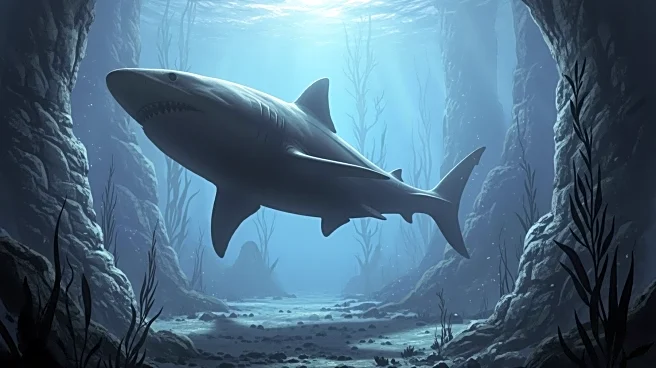
Researchers have discovered vertebrae from a massive prehistoric shark that ruled the seas off northern Australia during the Cretaceous period. This shark, an ancestor of today's great white, was about
8 meters long and lived 15 million years earlier than previously known mega-predators. The vertebrae were found near Darwin and date back 115 million years, making it the earliest known mega-predator of the modern shark lineage. The study, published in Communications Biology, highlights the evolutionary success of lamniform sharks, which have a 400-million-year history. The discovery suggests that these sharks rose early in their evolution to dominate prehistoric food chains.
Why It's Important?
This discovery provides significant insights into the evolutionary history of sharks, particularly the lamniform lineage, which includes modern great whites. Understanding the size and dominance of these ancient predators helps scientists piece together the ecological dynamics of prehistoric marine environments. The findings also underscore the importance of vertebrae in estimating the size of extinct sharks, offering a more accurate picture of their role in ancient ecosystems. This research could inform current studies on how modern species might adapt to environmental changes, as it sheds light on past biodiversity shifts and climate impacts.
What's Next?
The study may lead to further exploration of similar environments worldwide to uncover more evidence of ancient mega-predators. Researchers might focus on other regions rich in fossil evidence to better understand the distribution and evolution of these sharks. The findings could also inspire new methods for estimating the size and ecological roles of extinct marine species, enhancing our understanding of prehistoric life. Additionally, the study may prompt discussions on the conservation of modern shark species, drawing parallels between past and present ecological challenges.