
What's Happening?
Kongsberg Maritime has been awarded a contract by Austal USA to supply its Promas propulsion systems for the United States Coast Guard's Offshore Patrol Cutter (OPC) Heritage Class program. This contract involves
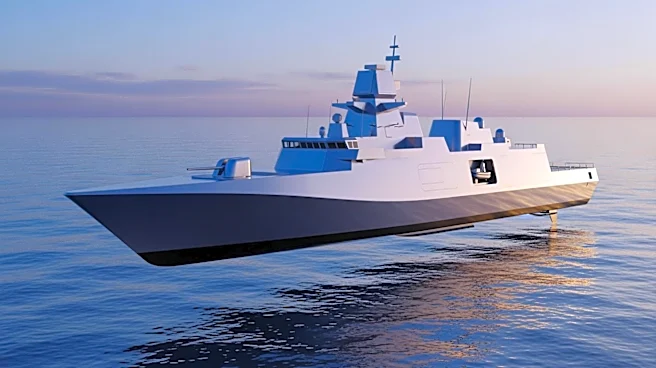
equipping the next four ships in the program with advanced propulsion technology. The Promas system integrates a rudder and controllable pitch propeller, optimizing the hydrodynamic properties of the ships to enhance efficiency and thrust while reducing energy consumption. In addition to the Promas systems, Kongsberg Maritime will provide steering gear, rudders, fin stabilizers, and tunnel thrusters. The OPC vessels, designed for long-range patrols, will replace the Coast Guard's medium endurance cutters, offering improved offshore capabilities. Each vessel will be 360 feet long, with a displacement of 3,700 long tons, a maximum speed of 22.2 knots, and a range of 9,050 nautical miles at 14 knots.
Why It's Important?
The contract with Kongsberg Maritime represents a significant investment in enhancing the U.S. Coast Guard's maritime capabilities. By equipping the new OPC vessels with advanced propulsion systems, the Coast Guard aims to improve operational efficiency and extend the range of its patrol missions. This upgrade is crucial for maintaining the effectiveness of the Coast Guard's missions, which include national security, law enforcement, and environmental protection. The Promas system's efficiency savings of around 6% can lead to longer mission durations and reduced operational costs. This development also underscores the strategic partnership between Kongsberg Maritime and Austal USA, highlighting the importance of international collaboration in advancing U.S. maritime technology.
What's Next?
As the OPC program progresses, the U.S. Coast Guard is expected to continue its investment in modernizing its fleet to meet future operational demands. The successful integration of Kongsberg Maritime's propulsion systems could lead to further contracts and collaborations, potentially involving additional vessels beyond the initial four. The Coast Guard's commitment to enhancing its offshore capabilities may also prompt other maritime agencies to consider similar technological upgrades. Stakeholders, including government officials and industry leaders, will likely monitor the program's outcomes to assess the impact of these advancements on national security and maritime operations.