










What's Happening?
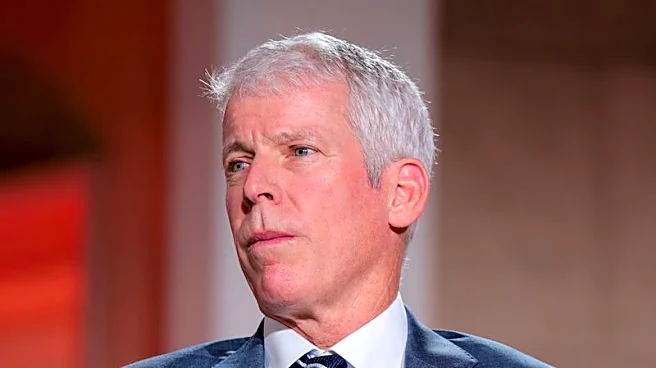
Guo Wengui, a self-exiled Chinese billionaire and former real estate tycoon, has been sentenced to 30 years in a U.S. federal prison. Guo, who fled China in 2017 and became a vocal critic of the Chinese Communist Party, was found guilty of orchestrating
a massive fraud scheme. The scam reportedly defrauded over 1,000 individuals worldwide, costing them hundreds of millions of dollars. Guo, also known as Miles Guo and Ho Wan Kwok, was convicted on nine out of twelve criminal charges. His fraudulent activities included raising over $1 billion from followers through business agreements and cryptocurrency schemes, which he used to fund a lavish lifestyle. The sentencing followed a seven-week trial where victims shared their experiences of financial ruin and betrayal.
Why It's Important?
The sentencing of Guo Wengui underscores the U.S. legal system's commitment to holding individuals accountable for large-scale financial fraud, regardless of their wealth or status. This case highlights the vulnerabilities in financial systems that can be exploited by charismatic figures promising high returns. The impact of Guo's actions extends beyond financial loss, affecting the trust and stability of investment communities. It also serves as a cautionary tale for investors to exercise due diligence and skepticism, especially in high-risk ventures. The case also touches on international relations, as Guo's asylum in the U.S. and his criticism of the Chinese government add a layer of geopolitical complexity.
What's Next?
Following the sentencing, there may be further legal actions as victims seek restitution. The case could prompt regulatory bodies to tighten oversight on investment schemes, particularly those involving cryptocurrency. Additionally, Guo's close ties with political figures, such as Steve Bannon, may lead to further scrutiny of political and financial networks. The U.S. may also face diplomatic challenges with China, given Guo's status as a political dissident. The broader implications for U.S.-China relations and the handling of asylum seekers involved in financial crimes could be significant.
Beyond the Headlines
Guo's case raises ethical questions about the responsibilities of influential figures in leveraging their platforms for personal gain. It also highlights the potential for financial fraud to intersect with political agendas, as seen in Guo's collaboration with Steve Bannon. The case may influence future policies on asylum and extradition, particularly for individuals accused of financial crimes in their home countries. Additionally, the role of social media in facilitating such schemes could lead to calls for greater accountability and regulation of online platforms.