








What's Happening?
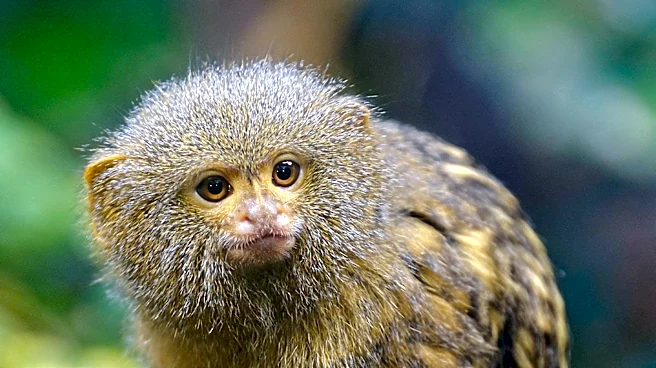
Scientists have discovered fossils of Purgatorius, the earliest known relative of all primates, in Colorado's Denver Basin, marking the southernmost find of this species in North America. This discovery provides new insights into the spread and evolution
of early primates following the mass extinction event that wiped out the dinosaurs approximately 65.9 million years ago. Previously, Purgatorius fossils were only found in Montana and southwestern Canada. The study, led by Dr. Stephen Chester and colleagues, suggests that archaic primates originated in the north and spread southward, diversifying after the Cretaceous Period.
Why It's Important?
The discovery of Purgatorius fossils in a more southern location than previously found is significant for understanding the geographical and evolutionary history of primates. It challenges previous assumptions about the distribution of early primates and highlights the importance of intensive fossil search techniques. This finding contributes to the broader understanding of how life recovered and evolved after the mass extinction event that ended the age of dinosaurs. It also underscores the potential for discovering new species and filling gaps in the fossil record, which can provide valuable insights into the evolutionary history of primates, including humans.
Beyond the Headlines
The discovery highlights the challenges in paleontology related to sampling bias, as traditional methods may overlook smaller fossils. The use of screen-washing techniques in this study demonstrates the potential for uncovering significant findings that might otherwise be missed. This approach could lead to more discoveries that reshape our understanding of early primate evolution. Additionally, the potential identification of a new species of Purgatorius from these fossils could further expand knowledge of primate diversity and adaptation in the post-dinosaur era.