


What's Happening?
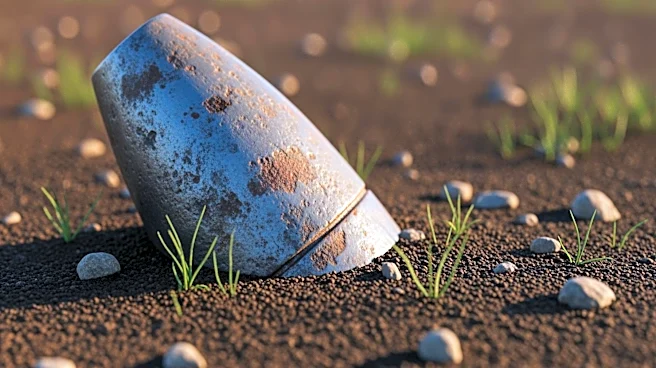
Archaeologists have uncovered an unexploded mortar shell at the Culloden Battlefield in Scotland, nearly 280 years after the Battle of Culloden. The shell, weighing nearly 18 pounds, is believed to have been fired from one of the government’s Coehorn
mortars during the battle. This discovery, announced on the 280th anniversary of the battle, provides fresh evidence for the deployment and action of government and Jacobite forces during the battle. The Battle of Culloden, fought on April 16, 1746, was the last large-scale pitched battle on British soil, where a Jacobite force led by Charles Edward Stuart clashed with troops loyal to King George II. The shell was found intact and gunpowder-packed, marking the first piece of complete government ordnance found at the site. Officials believe the shell landed on wet ground, extinguishing the fuse before it could ignite the powder.
Why It's Important?
The discovery of the unexploded mortar shell at Culloden Battlefield is significant as it offers new insights into the historical battle strategies and the deployment of forces. It enhances the understanding of the battle's dynamics and the use of artillery by government forces. This find also contributes to the broader historical narrative of the Jacobite uprising and its suppression, providing tangible evidence of the conflict. For historians and archaeologists, such discoveries are invaluable in piecing together historical events and understanding the technological and tactical aspects of warfare during that period. Additionally, it highlights the importance of preserving historical sites and the potential for new findings that can alter or enrich historical understanding.