



What's Happening?
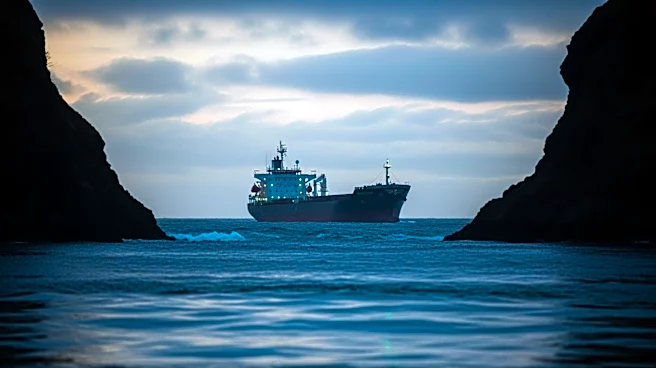
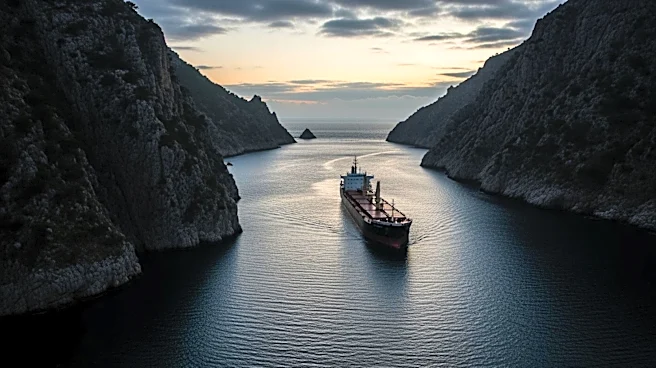
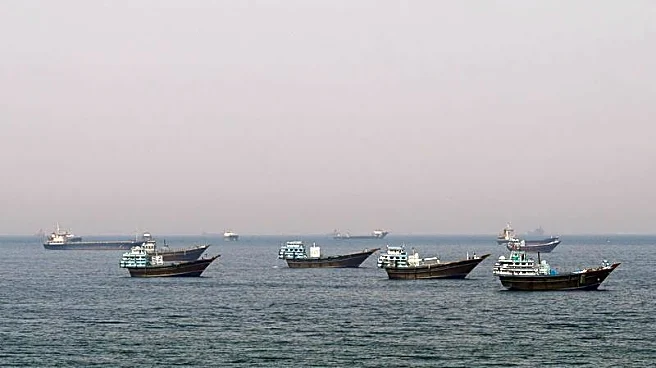
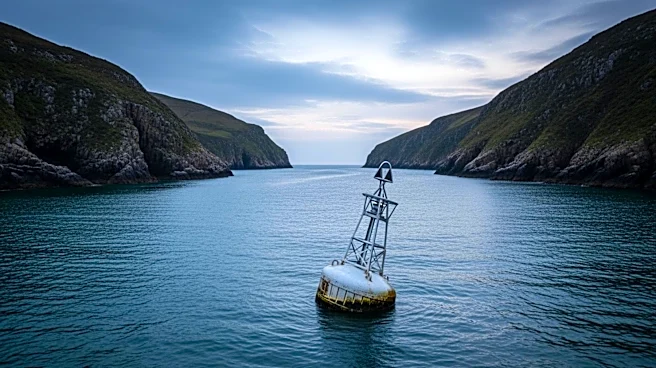
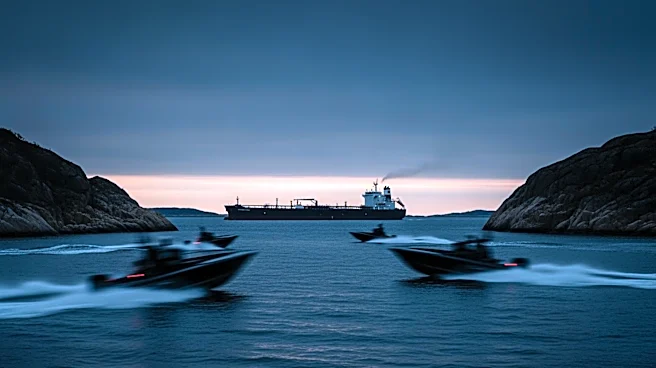
Iran has escalated its actions in the Strait of Hormuz, with gunboats firing on commercial vessels and seizing two ships, as its oil tankers attempt to navigate beyond the U.S.-enforced blockade. The UK Maritime Trade Operations reported that a cargo
ship and a container vessel were attacked, with one sustaining significant damage. Despite the blockade, Iranian oil exports continue, with tankers often switching off transponders to avoid detection. This escalation occurs as U.S.-Iran negotiations remain stalled, and the U.S. maintains its naval presence to curb Iranian shipments. The situation highlights the fragile security environment in a region that handles a significant portion of global oil flows.
Why It's Important?
The Strait of Hormuz is a critical chokepoint for global oil transportation, and any disruption can have significant implications for international energy markets. Iran's actions challenge the U.S. blockade, potentially leading to increased tensions and military confrontations. The continued export of Iranian oil, despite U.S. efforts, indicates Tehran's determination to maintain its economic lifeline. This situation could lead to further volatility in oil prices and impact global supply chains. The geopolitical implications are significant, as the U.S. and its allies must navigate the complexities of enforcing sanctions while avoiding escalation into broader conflict.
What's Next?
The international community will be watching closely for any developments in U.S.-Iran negotiations, as diplomatic efforts could provide a path to de-escalation. However, the risk of further maritime incidents remains high, with potential consequences for global trade and energy security. The U.S. may consider additional measures to enforce the blockade, while Iran could continue to test the limits of U.S. resolve. The situation also poses challenges for shipping companies operating in the region, as they must weigh the risks of navigating through a volatile area.