



What's Happening?
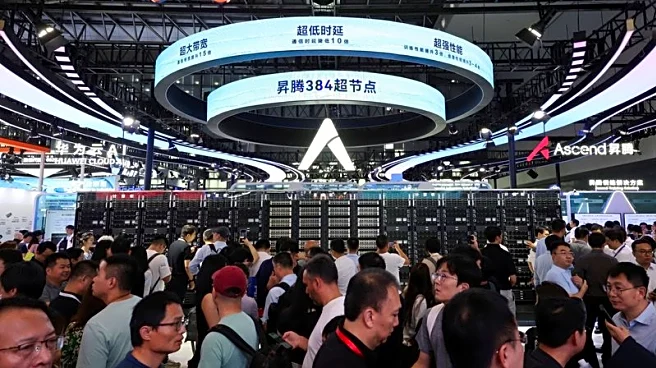
The 2026 Zhongguancun Forum (ZGC Forum) in Beijing showcased significant advancements in China's embodied intelligence industry. The event highlighted the integration of advanced robotics into real-world applications, with robots demonstrating tasks such
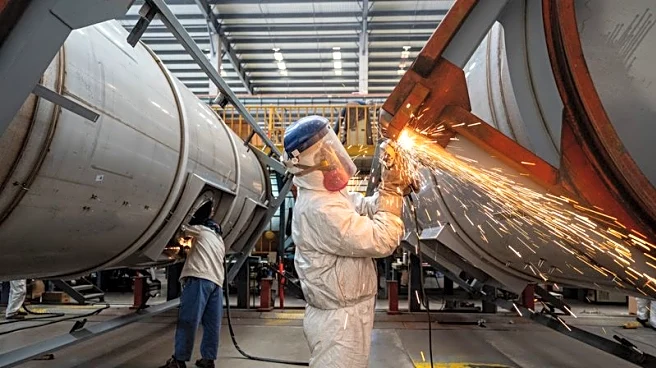
as preparing desserts and threading needles. This progress is driven by technological breakthroughs, reduced hardware costs, and diverse application scenarios. The Zhongguancun Embodied Intelligence Innovation Industrial Park is central to this development, hosting numerous companies and fostering a collaborative ecosystem. Chinese robotics start-ups, like LINKERBOT, are gaining global recognition, with their products now holding a significant share of the international market. The forum also revealed that China's industrial robot exports surged by nearly 49% in 2025, marking the country as a net exporter in this sector for the first time.
Why It's Important?
China's advancements in embodied intelligence are reshaping its position in the global value chain, enhancing its role in industrial automation. The growth of this industry is expected to exceed 1 trillion yuan by 2035, indicating its potential as a new economic growth engine. The shift towards high-end, smarter manufacturing is crucial for China's economic strategy, as it seeks to maintain its leading position in global manufacturing. The increased export of industrial robots reflects international confidence in Chinese technology and supports the diversification of markets. This development not only boosts China's economic standing but also influences global manufacturing trends, as more countries adopt Chinese-made robotics for industrial applications.
What's Next?
The embodied intelligence industry in China is poised for further expansion, with plans to integrate robotic technologies into more industrial applications. Companies like LINKERBOT aim to deploy their products in tasks that are hazardous or repetitive for human workers, enhancing productivity and safety. The continued investment in this sector, as outlined in China's Government Work Report, suggests a sustained focus on innovation and international competitiveness. As the industry grows, it is likely to attract more foreign investment and partnerships, further solidifying China's role as a leader in robotics and embodied intelligence.
Beyond the Headlines
The rise of embodied intelligence in China presents ethical and cultural implications, particularly concerning the displacement of human labor. As robots take on more complex tasks, there is a need to address potential job losses and ensure that the workforce is equipped with the skills needed for a technology-driven economy. Additionally, the global adoption of Chinese robotics may influence cultural perceptions of technology and innovation, positioning China as a key player in shaping the future of industrial practices worldwide.