


What's Happening?
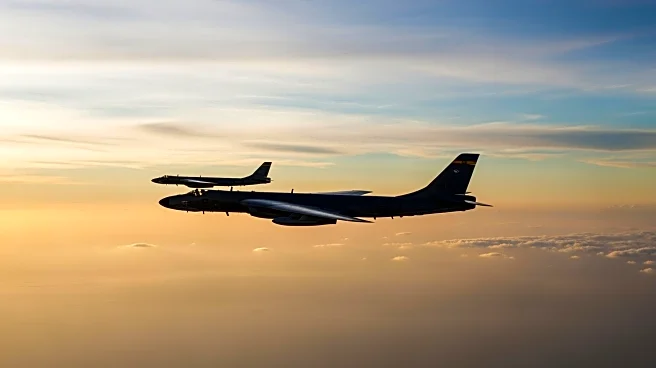
The United States dispatched two B-52H bombers to Japan for exercises following a joint air patrol by Russian and Chinese military aircraft near Japanese territory. This move is part of ongoing efforts to bolster military readiness amid rising tensions
in the region. Japan, a key U.S. ally, hosts approximately 60,000 American troops and advanced military equipment. The joint exercises with Japan's Air Self-Defense Force aim to demonstrate the strong alliance between the two nations and their commitment to maintaining regional stability. The drills come amid criticism from Russia and China regarding Japan's military posture and its hosting of U.S. missile systems.
Why It's Important?
The U.S. bomber drills underscore the strategic importance of the U.S.-Japan alliance in maintaining security in the Indo-Pacific region. As tensions with Russia and China continue to rise, these exercises serve as a deterrent against potential aggression and demonstrate the U.S.'s commitment to its allies. The presence of U.S. military forces in Japan is crucial for regional stability and acts as a counterbalance to the growing military capabilities of Russia and China. The situation highlights the complex security dynamics in the region and the need for continued cooperation between the U.S. and its allies.
What's Next?
The U.S. may continue to enhance its military presence in the western Pacific, potentially deploying additional aircraft and naval vessels to deter further provocations. Diplomatic efforts may also be pursued to address the underlying tensions and prevent escalation. The situation will likely influence future U.S. military strategies and alliances in the region, as well as Japan's defense policies. The international community will be closely monitoring developments to assess the potential impact on regional and global security.