






What's Happening?
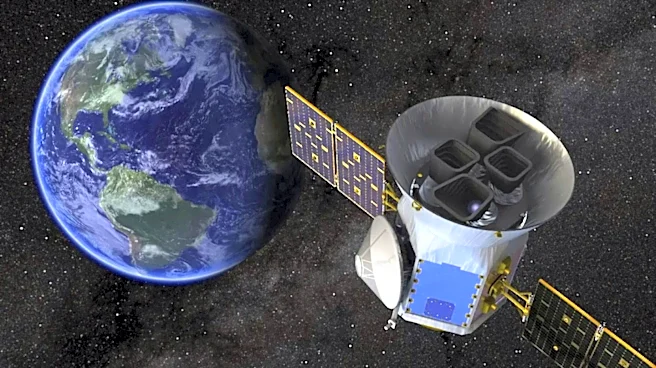
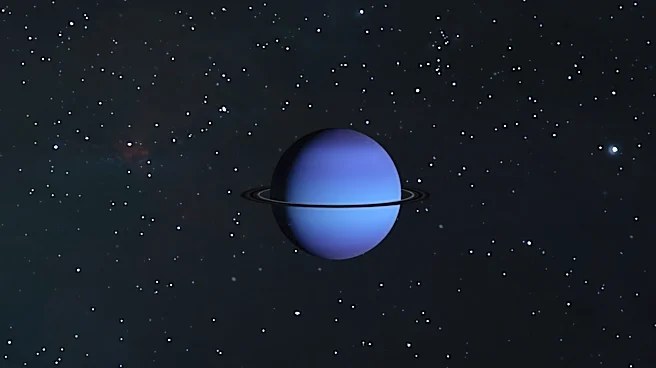
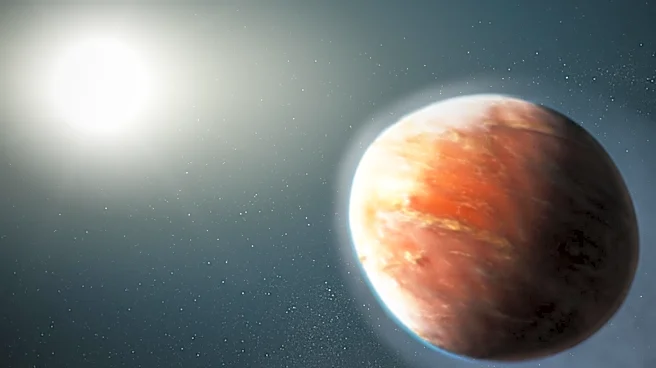
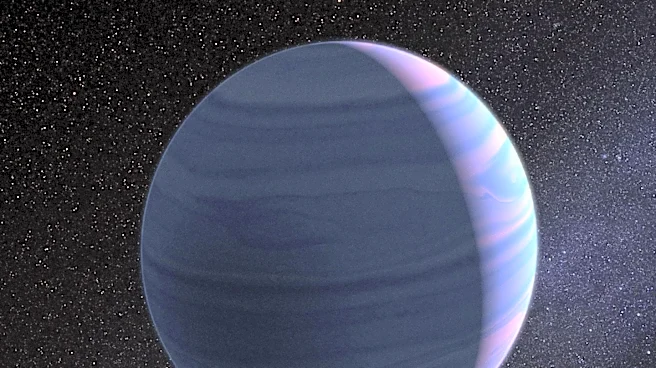
Astronomers have identified two giant exoplanets, described as 'super-puffs,' which are lighter than cotton candy. These planets, comparable in size to Jupiter, were detected by NASA's TESS satellite and are located 1,110 light-years away in the constellation
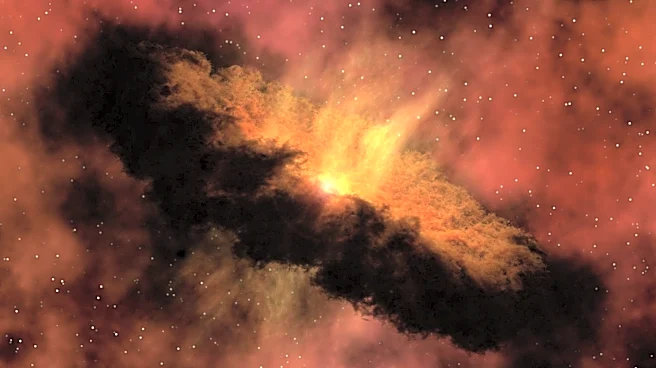
Volans. The discovery was reported by George Dransfield from the University of Oxford, who noted that these planets have densities similar to shaving foam. The planets are believed to be composed mostly of hydrogen and helium, and their low density is attributed to their formation in a gas-rich environment around a newborn star. This finding adds to the nearly 6,300 confirmed exoplanets, with fewer than 40 classified as super-puffs.
Why It's Important?
The discovery of these super-puff planets provides valuable insights into planetary formation and the diversity of planetary systems. Understanding such rare planetary types helps scientists piece together the complex processes that lead to planet formation. This knowledge can inform models of our own solar system's development and the potential for life-supporting conditions elsewhere in the universe. The study of these planets also highlights the capabilities of current astronomical technology, such as NASA's TESS satellite, in expanding our understanding of the cosmos.