







What's Happening?
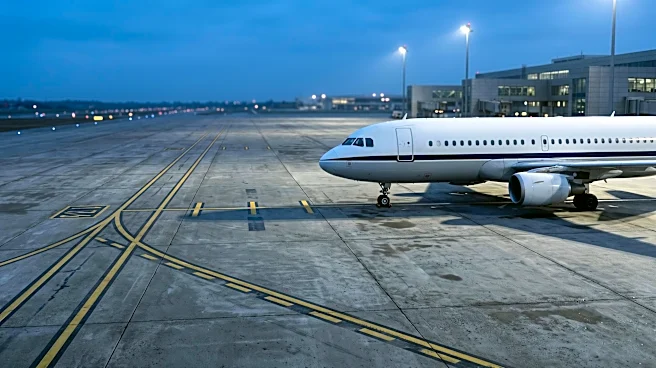
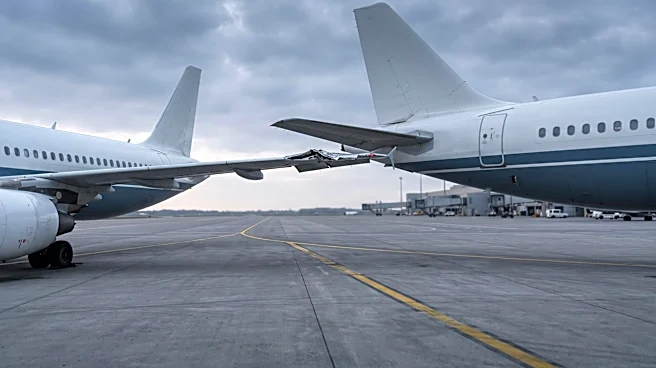
Two Eastern Air Express jets, involved in U.S. Immigration and Customs Enforcement (ICE) deportation activities, collided wings at the Akron-Canton Regional Airport on Monday. The incident occurred when one Boeing 737, taxiing for takeoff, struck the stabilizer
wing of another parked Eastern Air Express jet. This collision rendered both aircraft inoperable and grounded all ICE-related deportation flights at the airport for much of the week. Operations were temporarily rerouted to Youngstown-Warren Regional Airport for at least three days, though online flight trackers indicated a return of flights to Akron-Canton by Friday. The Akron-Canton Airport Authority is also awaiting payment of $46,153 in landing fees from the three air charter companies involved in these deportation flights, with invoices outstanding since June. Only Air Wisconsin has reportedly inquired about their invoices, while Eastern Air Express owes $41,540 and Global X owes $3,034.
Why It's Important?
This incident highlights several critical issues surrounding the logistics and oversight of U.S. deportation operations. The temporary halt of flights at Akron-Canton Regional Airport underscores the potential for operational disruptions to impact the efficiency of ICE's activities. The transfer of deportation flights from Youngstown-Warren to Akron-Canton in April, due to runway repairs, indicates the reliance on regional airports for these operations and the challenges associated with their temporary nature. Furthermore, the outstanding landing fees owed by the charter companies to the Akron-Canton Airport Authority raise questions about financial accountability and the business relationships between public airport authorities and private contractors involved in federal operations. This situation could lead to increased scrutiny of the financial arrangements and operational protocols for deportation flights at regional airports across the U.S.
What's Next?
The two Eastern Air Express Boeing 737s involved in the collision remain parked at the Akron-Canton Regional Airport, awaiting inspection and clearance to return to service. The Ohio State Patrol has an open investigation into the collision. It is unclear when the disabled planes will be operational again, which could continue to affect the capacity for deportation flights from Akron-Canton. The Akron-Canton Airport Authority will likely continue efforts to collect the outstanding landing fees from Eastern Air Express, Global X, and Air Wisconsin. Future discussions may arise regarding the long-term use of Akron-Canton for deportation flights, especially given the temporary nature of their transfer from Youngstown-Warren and the financial discrepancies. The incident may also prompt a review of safety protocols for ground operations involving these specialized charter flights.
Beyond the Headlines
The incident at Akron-Canton Regional Airport sheds light on the often-opaque nature of U.S. Immigration and Customs Enforcement (ICE) deportation activities. The difficulty in obtaining information from ICE and the charter airlines involved suggests a lack of transparency that can hinder public understanding and oversight. The reliance on local airport authorities, reporter observations, and flight tracking software for information underscores the limited official communication surrounding these operations. The financial dispute over landing fees also points to potential systemic issues in how federal agencies and their contractors manage their financial obligations with local public entities. This situation could trigger broader conversations about the ethical implications of public airports hosting deportation flights and the responsibilities of public agencies to ensure transparency and accountability in such operations, particularly when involving vulnerable populations.