



What's Happening?
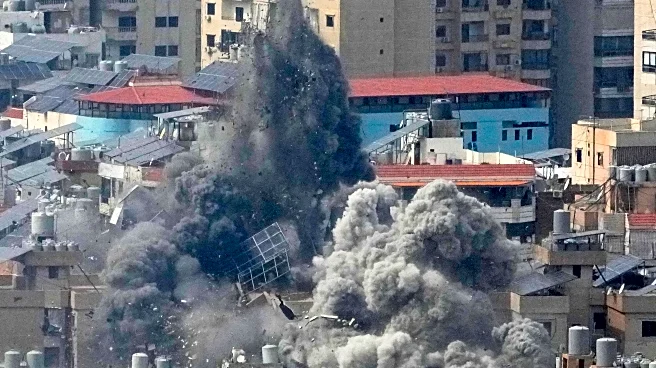
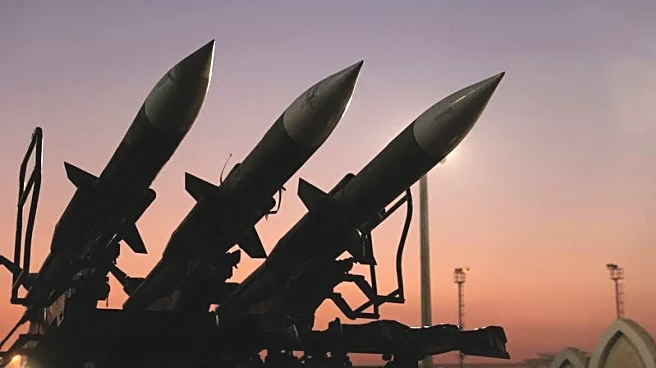
The United States and Israel are advancing to a new phase in their military operations against Iran, focusing on dismantling Iran's military industry. This shift follows a week of intensive bombing aimed at degrading Iran's missile launch capabilities.
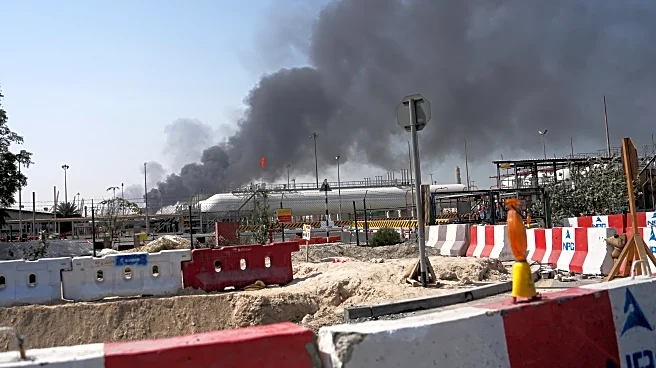
The new targets include factories and supply chains involved in the production of missiles and drones. The operations are designed to disrupt Iran's entire chain of military capabilities, from production to deployment. The strategy involves using American bombers to penetrate deeply buried targets, aiming to significantly impair Iran's military production capabilities. This approach is expected to target dual-use facilities, which serve both civilian and military purposes, to further cripple Iran's military industry.
Why It's Important?
The escalation in military operations against Iran's military industry by the U.S. and Israel is significant as it aims to weaken Iran's military capabilities and economic stability. By targeting the production and supply chains of military equipment, the operations could delay Iran's ability to rebuild its military forces. This move also underscores the strategic partnership between the U.S. and Israel in countering perceived threats from Iran. The potential economic impact on Iran could be severe, as the destruction of dual-use facilities may hinder both military and civilian production, exacerbating the country's economic challenges. The operations could also influence regional stability, as Iran's response to these attacks remains uncertain.
What's Next?
The continuation of these military operations could lead to further escalation in the region. Iran may seek to rebuild its military capabilities despite the setbacks, potentially with support from allies like Russia, China, and North Korea. The U.S. and Israel may continue to apply pressure through military and economic means, including maintaining or increasing sanctions. The international community will likely monitor the situation closely, as further destabilization could have broader implications for global security and economic markets. The potential for diplomatic efforts to de-escalate tensions remains, but the current focus appears to be on military action.
Beyond the Headlines
The targeting of dual-use facilities raises ethical and legal questions about the distinction between civilian and military targets in conflict. The operations could lead to civilian casualties and infrastructure damage, complicating international perceptions and potentially drawing criticism. The long-term impact on Iran's economy and society could be profound, as the destruction of industrial facilities may lead to job losses and economic hardship. Additionally, the conflict highlights the complexities of modern warfare, where technological and industrial capabilities play a crucial role in national security.