


What's Happening?
The United States, under President Trump's administration, is facing a significant challenge due to Iran's strategic closure of the Strait of Hormuz. This move has led to a sharp increase in global oil prices, with the cost per barrel surpassing $100
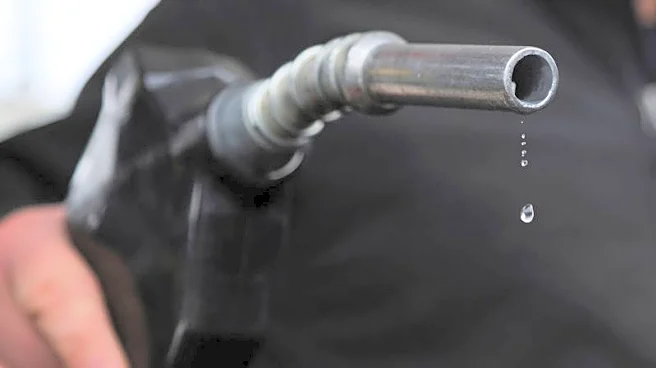
for the first time in four years. The closure has resulted in American consumers paying higher prices at the pump, with the national average rising to $3.72 per gallon. Despite being the world's largest oil producer, the U.S. is affected by global market dynamics, as domestic oil prices are tied to international rates. The situation has sparked a debate on whether the U.S. should intervene militarily or seek diplomatic solutions, or if it should leverage its domestic oil production to mitigate the impact of such geopolitical events.
Why It's Important?
The closure of the Strait of Hormuz by Iran has significant implications for the U.S. economy and energy policy. As a major oil producer, the U.S. has the capacity to meet its energy needs domestically. However, the lack of a separate pricing mechanism for American oil means that domestic consumers are still vulnerable to global price fluctuations. This situation highlights the need for a strategic approach to energy independence and consumer protection. The rising fuel prices could have broader economic impacts, affecting transportation costs, inflation, and consumer spending. Additionally, the political ramifications are considerable, as energy prices are a critical issue for voters, potentially influencing upcoming elections.
What's Next?
The U.S. government may consider implementing policies to insulate domestic consumers from global oil price volatility. This could involve setting a domestic pricing structure that prioritizes American supply and demand conditions, while allowing surplus production to be sold at global prices. Such measures would require careful consideration of market dynamics and potential impacts on domestic producers. Additionally, the administration might explore diplomatic avenues to resolve the standoff with Iran, aiming to reopen the Strait of Hormuz and stabilize oil markets. The situation also calls for a reassessment of U.S. energy policy, focusing on long-term strategies for energy security and economic resilience.
Beyond the Headlines
The current crisis underscores the complex interplay between geopolitics and energy markets. It raises questions about the sustainability of relying on global oil markets and the need for diversified energy sources. The situation also highlights the potential for renewable energy to play a larger role in reducing dependency on fossil fuels and mitigating the impact of geopolitical disruptions. Furthermore, the crisis may prompt discussions on the ethical implications of energy policies that prioritize market access over consumer protection, and the role of government in balancing these interests.