






What's Happening?
The U.S. House of Representatives has passed H.R. 9617, the Coordinating and Harnessing America’s Recovery of Minerals (CHARM) Act, by voice vote. Introduced by U.S. Representative Gary Palmer, R-Alabama, and co-sponsored by U.S. Representative Paul Tonko,
D-New York, the bipartisan legislation aims to reduce the nation's dependence on foreign sources for critical minerals. The bill directs the Environmental Protection Agency (EPA) to develop and implement a National Critical Mineral Recovery Strategy. This strategy will coordinate federal efforts to recover critical minerals from discarded materials, including mining waste, electronic waste, and coal ash, which are already present within the United States. The legislation emphasizes making greater use of domestic resources to bolster national security and economic power, rather than relying on traditional mining or foreign adversaries. The strategy will also examine existing federal programs, potential barriers to mineral recovery, and the environmental and health impacts of increased recovery.
Why It's Important?
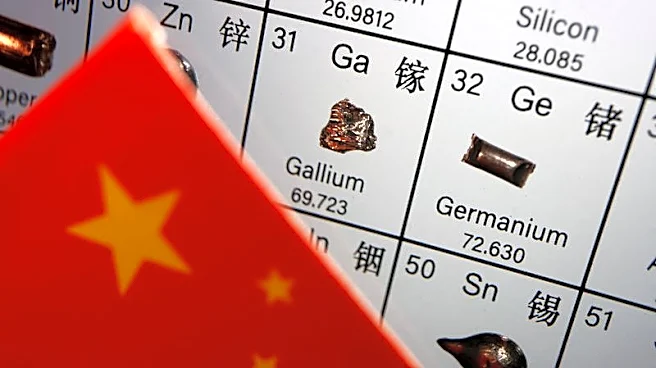
This legislation is crucial for strengthening U.S. national security and economic independence. By focusing on recovering critical minerals from domestic waste streams, the CHARM Act directly addresses the nation's vulnerability to supply chain disruptions and geopolitical pressures from countries like China, which currently dominate the critical mineral market. These minerals are vital for various sectors, including energy, manufacturing, and national defense. Reducing reliance on foreign sources ensures a more stable and secure supply for key U.S. industries, fostering domestic job creation and technological innovation. Furthermore, the bill's emphasis on environmental and health considerations during mineral recovery highlights a commitment to sustainable practices, potentially mitigating the ecological footprint associated with traditional mining. The bipartisan support for the CHARM Act underscores a broad consensus on the strategic importance of securing critical mineral supplies for the nation's future.
What's Next?
Following its passage in the House, the CHARM Act now moves to the Senate for consideration. If approved by the Senate, it will then be sent to the President for signature to become law. Upon enactment, the EPA will be tasked with developing the National Critical Mineral Recovery Strategy, which will involve coordinating federal efforts and identifying opportunities for increased domestic recovery. The bill mandates that the EPA report to Congress every two years on the activities carried out under this strategy. While the immediate impact is the creation of a coordinated federal strategy rather than new mandates for companies or consumers, the legislation sets the stage for future policies and initiatives aimed at enhancing domestic critical mineral recovery. The Congressional Budget Office estimates the legislation will cost approximately $1 million over the 2026-2031 period, subject to appropriated funds.
Beyond the Headlines
The CHARM Act represents a significant shift in the U.S. approach to resource management, moving beyond traditional extraction methods to embrace a circular economy model for critical minerals. This initiative could catalyze innovation in recycling technologies and waste processing, transforming what was once considered waste into valuable resources. The focus on domestic recovery also has broader implications for environmental justice, as it seeks to minimize risks to human health and the environment, potentially reducing the impact on communities often disproportionately affected by mining and waste disposal. Moreover, by reducing dependence on adversarial nations, the U.S. can enhance its strategic autonomy and leverage its own resources to drive economic growth and maintain its competitive edge in critical technological sectors. This legislative effort could also inspire similar initiatives in other countries facing critical mineral supply challenges, fostering a global movement towards more sustainable and secure resource management.