




What's Happening?
The Government of Ireland has provided EUR 4.5 million to the UN World Food Programme (WFP) in Uganda. This funding is designated to support self-reliance and social protection initiatives in the drought-affected Karamoja region. The program aims to benefit
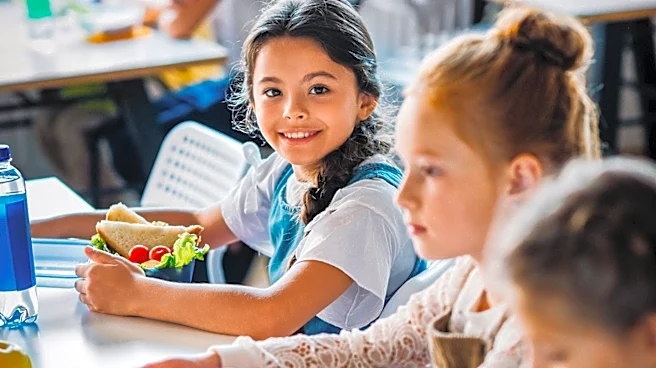
over 221,000 schoolchildren through daily meals, assist 108,000 smallholder farmers, and help 19,200 refugees and host communities transition towards self-reliance. Additionally, WFP will strengthen social protection systems in Karamoja by providing regular cash payments to 5,100 mothers, young children, and older people. This initiative seeks to enhance communities' resilience to shocks, protect access to education, and foster long-term livelihoods in a region severely impacted by prolonged drought.
Why It's Important?
This significant contribution from Ireland highlights a growing international focus on integrated humanitarian and development approaches, particularly in regions facing climate-induced crises and displacement. By combining immediate food assistance with long-term strategies like school feeding, agricultural support, and financial literacy for refugees, the program addresses both acute hunger and underlying vulnerabilities. This multi-sectoral approach is crucial for breaking cycles of dependency and building sustainable resilience within communities. The emphasis on strengthening government-led social protection systems also signifies a commitment to national ownership and long-term sustainability, which is vital for ensuring that aid efforts translate into lasting positive change and reduce future humanitarian needs.
What's Next?
With Ireland's funding, WFP will proceed with providing daily meals in 284 schools across Karamoja and continue supporting Uganda’s Ministry of Education and Sports in developing the country's first national school feeding policy. The initiative will also implement programs for 108,000 smallholder farmers, linking assistance to household resilience and income opportunities. For refugees and host communities, activities will include financial literacy, business planning, vocational skills training, and support for savings groups and small business startups. These efforts are expected to continue building self-reliance and strengthening social protection systems, with ongoing monitoring to assess their impact on reducing hunger and improving livelihoods in the region.
Beyond the Headlines
The Irish funding for WFP in Uganda represents a broader strategic shift in humanitarian aid towards 'humanitarian-to-development' transitions. This approach recognizes that protracted crises require solutions that go beyond immediate relief to address root causes and build long-term stability. The focus on empowering smallholder farmers and providing financial literacy to refugees not only enhances food security but also fosters economic independence, reducing reliance on external aid. This model could serve as a blueprint for other donor nations and aid organizations, demonstrating how targeted investments in education, livelihoods, and social protection can create sustainable pathways out of poverty and vulnerability, ultimately contributing to regional stability and reducing the burden on international humanitarian systems.