






What's Happening?
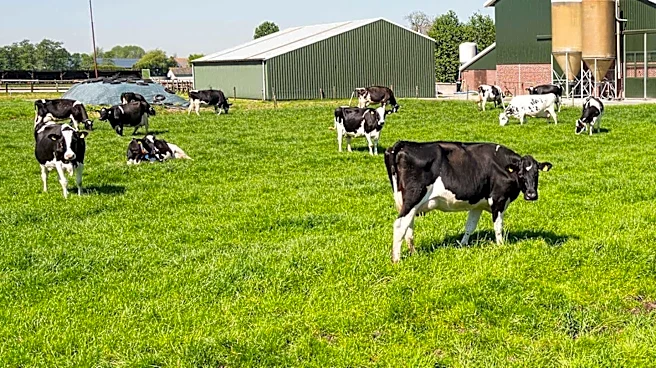
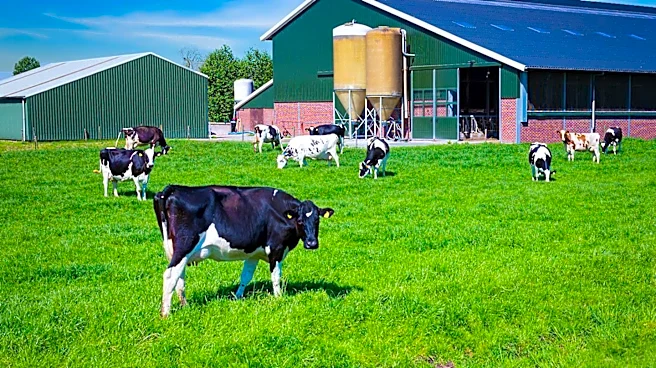
Highly pathogenic avian influenza (HPAI), commonly known as bird flu, is rapidly spreading among dairy farms in Washington state. In a span of three weeks, 27 dairy farms have tested positive for the virus. The Washington State Department of Agriculture
confirmed the initial detections in two Yakima County dairy herds in early October, with subsequent reports in Benton County by October 26. State veterinarian Amber Itle noted the virus's fast movement despite containment efforts, though she emphasized that the risk to humans remains very low. Milk from infected dairy cows is not considered a risk for human consumption if pasteurized, as the process kills the virus. The virus has not been found in meat. Washington is the 20th state to detect avian influenza in dairy cattle, and researchers are still working to fully understand all transmission pathways, which may include flies, wind, and birds.
Why It's Important?
The rapid spread of HPAI across 27 dairy farms in Washington state within a short period highlights a significant challenge for the agricultural sector. While the immediate human health risk from consuming pasteurized milk is low, the widespread infection in dairy herds can lead to substantial economic impacts for farmers. Symptoms in infected cattle include decreased milk production, changes in milk appearance, loss of appetite, and fever, which can result in financial losses and operational disruptions. The difficulty in containing the virus, partly due to an incomplete understanding of all transmission routes, poses an ongoing threat to dairy farming operations. This situation underscores the need for continuous surveillance, robust biosecurity measures, and further research into HPAI transmission to protect both animal health and the economic stability of the dairy industry.
What's Next?
In response to the outbreak, the Washington State Department of Agriculture is implementing weekly testing for every farm in the targeted milkshed where the spread is observed. Farms with suspected cases are advised to isolate affected animals and report symptoms to the state. Most infected cattle are expected to recover within six weeks with proper treatment. However, the ongoing challenge of understanding all transmission mechanisms means that containment efforts will remain complex. Future actions may include enhanced biosecurity protocols, public awareness campaigns for farmers, and continued collaboration between agricultural and public health agencies to monitor and mitigate the spread of the virus. The situation will likely inform future strategies for managing HPAI in dairy cattle across the U.S.
Beyond the Headlines
The HPAI outbreak in Washington's dairy farms points to broader ecological and agricultural implications. The potential for the virus to be carried by environmental factors like wind and flies, in addition to direct animal contact, suggests that traditional biosecurity measures might need to be re-evaluated and expanded. This highlights the intricate relationship between wildlife, livestock, and human activity in the context of disease transmission. The economic strain on individual dairy farmers, coupled with the broader implications for the state's agricultural economy, could lead to discussions about government support, insurance, and long-term strategies for disease resilience in the farming sector. Furthermore, the incident reinforces the importance of the 'one health' approach, emphasizing that animal health directly impacts public health and economic stability, necessitating integrated solutions.