



What's Happening?
Saudi Arabia's ROSHN Group is actively seeking private investors for the Aramco Stadium in Al Khobar, a venue for the 2034 FIFA World Cup. This move is part of a broader strategy to attract external capital to support the Kingdom's economic transformation
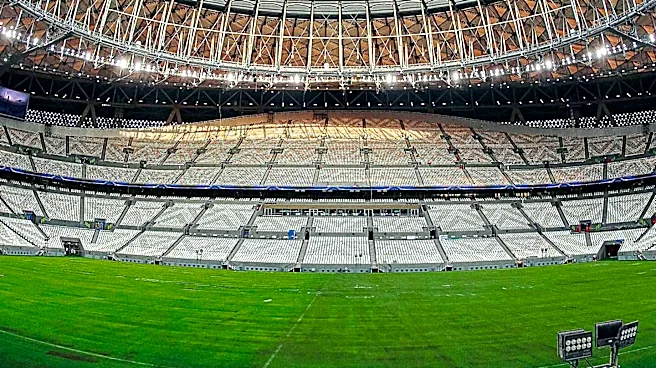
projects. The ROSHN Group, backed by the Public Investment Fund (PIF), is facing financial pressures due to overspending and lower global oil prices, which have impacted state revenues. The Aramco Stadium, a 47,000-seat facility, is under construction and will serve as the home stadium for Al-Qadsiah FC. The project is part of Saudi Arabia's Vision 2030, which aims to diversify the economy away from oil dependency.
Why It's Important?
The initiative to attract private investment for the Aramco Stadium highlights Saudi Arabia's shift towards leveraging private capital to fund major infrastructure projects. This approach is crucial for the Kingdom as it seeks to reduce its reliance on oil revenues and foster economic diversification. The success of this investment strategy could set a precedent for future projects under the Vision 2030 framework, potentially attracting more international investors to Saudi Arabia. The development of the Aramco Stadium also underscores the Kingdom's commitment to hosting international sporting events, which can boost tourism and global visibility.
What's Next?
The completion of the Aramco Stadium is expected by the end of the year, with its first event scheduled for January. The ROSHN Group plans to use a lease and leaseback structure to attract investors, similar to previous deals involving Saudi Aramco's pipeline assets. This strategy could provide a steady income stream for investors while freeing up capital for ROSHN to invest in other projects. The success of this funding model could influence future infrastructure financing in Saudi Arabia, particularly as the country prepares for the 2034 FIFA World Cup.
Beyond the Headlines
The push for private investment in Saudi Arabia's infrastructure projects reflects broader economic challenges, including fluctuating oil prices and budget deficits. The Kingdom's ability to attract and manage private capital will be critical in achieving its Vision 2030 goals. Additionally, the focus on sports infrastructure aligns with Saudi Arabia's efforts to enhance its global image and promote cultural and economic openness. The outcome of these investment initiatives could have long-term implications for the region's economic stability and international partnerships.