








What's Happening?
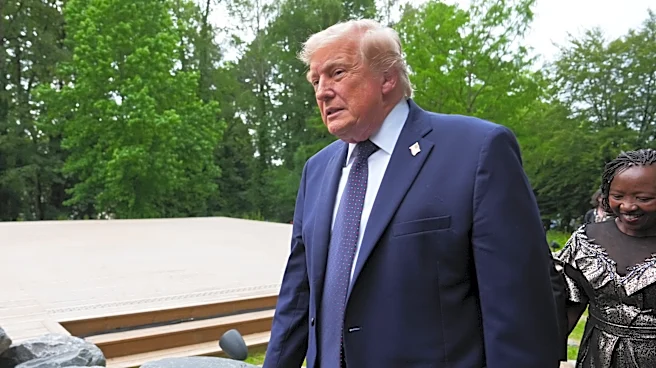
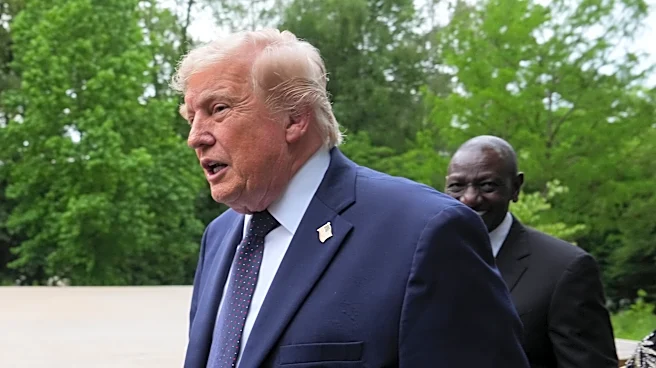
President Trump has come under scrutiny for his refugee policy, which critics label as overtly racist. The policy, which has drastically reduced the number of refugees allowed into the United States, primarily favors white South Africans. This approach
marks a significant departure from historical U.S. norms of welcoming diverse groups of refugees. Trump's administration has capped refugee admissions at 7,500 for the current fiscal year, a stark contrast to the 125,000 cap during President Biden's final year. The policy has been criticized for excluding refugees from war-torn regions like Afghanistan, despite their contributions to U.S. military efforts. Trump's plans to celebrate World Refugee Day by hosting resettled white South Africans at the White House further highlight the controversial nature of his refugee stance.
Why It's Important?
The implications of President Trump's refugee policy are significant, affecting the U.S.'s global image and its historical role as a haven for the oppressed. By prioritizing white South Africans, the policy has been accused of undermining the moral and economic benefits that a diverse refugee population brings to the country. This approach could erode America's leadership in global humanitarian efforts and damage its reputation as a beacon of freedom and opportunity. The exclusion of Afghan refugees, who have supported U.S. military operations, raises ethical concerns and could impact future international collaborations. The policy also reflects broader themes of nationalism and racial preference, which could influence domestic and international perceptions of the U.S.
What's Next?
As World Refugee Day approaches, there may be increased advocacy and pressure from civil society groups and political leaders to challenge and potentially reverse President Trump's refugee policy. Congressional members and resettlement organizations might intensify their efforts to support a more inclusive refugee program. The administration's stance could face legal challenges or legislative actions aimed at increasing refugee admissions and diversifying the countries of origin. Public opinion and media coverage may also play a role in shaping future policy decisions, as stakeholders debate the ethical and practical implications of the current approach.
Beyond the Headlines
The refugee policy under President Trump could have long-term cultural and demographic impacts on the U.S. By limiting the diversity of incoming refugees, the policy may alter the cultural fabric of American society, which has historically been enriched by a wide array of immigrant communities. This shift could influence social dynamics, economic growth, and the nation's ability to innovate and compete globally. Additionally, the policy raises questions about the U.S.'s commitment to international human rights standards and its role in addressing global humanitarian crises.