


What's Happening?
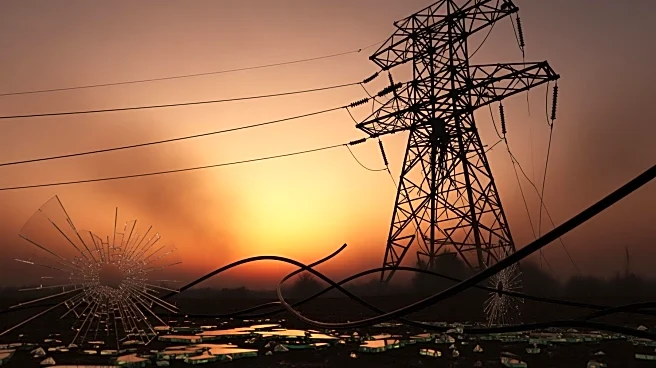
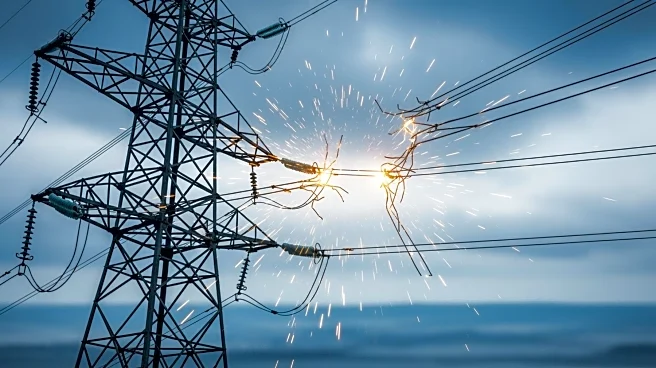
Russia has launched a significant drone and missile attack on Ukraine, targeting the power grid during freezing temperatures. This marks the second major assault in four days, with nearly 300 drones, 18 ballistic missiles, and seven cruise missiles fired
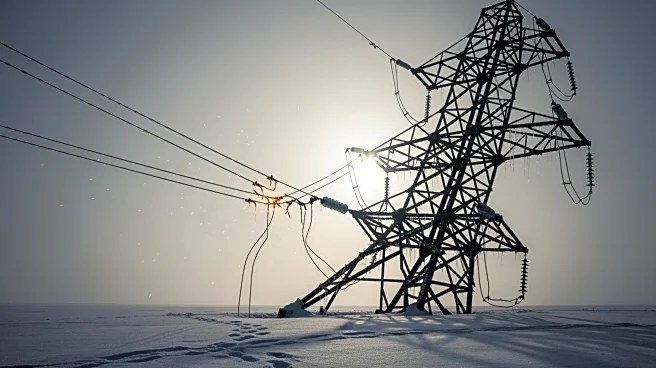
at eight regions. The attack resulted in the death of four individuals in the Kharkiv region and left several hundred thousand households without power in Kyiv. The city has been experiencing severe power shortages, with temperatures dropping to minus 12 degrees Celsius. The U.S. has condemned Russia's actions as a dangerous escalation, especially as peace negotiations are being pursued.
Why It's Important?
The escalation of attacks by Russia on Ukraine's power infrastructure is significant as it aims to weaken Ukrainian resistance by depriving civilians of essential services like heat and electricity. This strategy, described as 'weaponizing winter,' could lead to increased humanitarian challenges and further destabilize the region. The U.S. and its allies are concerned about the potential for broader conflict, especially with the use of advanced weaponry like hypersonic missiles. The situation underscores the ongoing geopolitical tensions and the challenges in achieving a peaceful resolution.
What's Next?
Ukraine is seeking expedited delivery of air defense systems from the U.S. and Europe to counter the ongoing attacks. The international community, particularly NATO allies, may need to reassess their support strategies for Ukraine. The continued targeting of civilian infrastructure could lead to increased international pressure on Russia and potentially more sanctions. The humanitarian situation in Ukraine is likely to worsen if the attacks persist, necessitating further international aid and support.