



What's Happening?
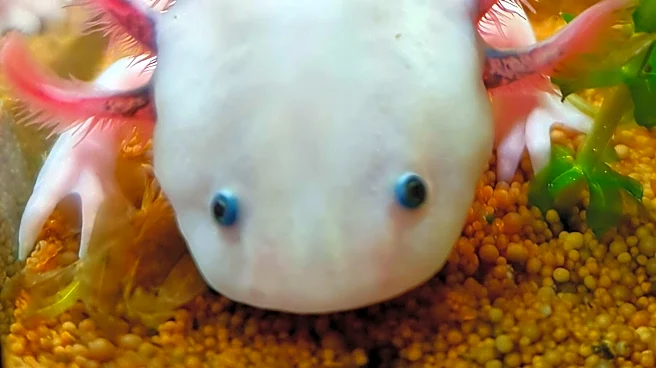
The axolotl (Ambystoma mexicanum), a unique salamander, possesses extraordinary regenerative capabilities, allowing it to regrow entire limbs, portions of its heart, sections of its spinal cord, parts of its retina, and even portions of its forebrain
without forming scar tissue. This remarkable biological feat involves a process where, after an injury, epidermal cells rapidly cover the wound, forming a wound epithelium that develops into an apical epithelial cap. Beneath this cap, specialized cells dedifferentiate, reverting to a more embryonic state to form a blastema, which then rebuilds the missing structure following the original embryonic blueprint. Key molecular mechanisms, such as retinoic acid, act as a positional ruler, guiding the reconstruction of structures like limbs. Furthermore, ependymoglial cells in its brain and spinal cord function as dormant neural stem cells, enabling scar-free neural regeneration. The axolotl's immune system also plays a critical role, with macrophages quickly adopting a pro-regenerative signaling mode rather than promoting scarring, a stark contrast to mammalian healing. Despite these incredible biological advantages, the wild population of axolotls faces a severe threat, with fewer than 1,000 individuals estimated to remain in their sole natural habitat, the shrinking network of canals in Xochimilco, on the southern edge of Mexico City. This decline is primarily driven by environmental pressures including wastewater pollution, nutrient loading causing algal blooms, the introduction of invasive species like carp and tilapia that prey on axolotl eggs and larvae, and the relentless expansion of urban areas. While hundreds of thousands of axolotls thrive in captivity globally, the wild population is critically endangered, highlighting a significant conservation challenge.
Why It's Important?
The axolotl's unparalleled regenerative capacity holds profound importance for human medicine and scientific understanding. Its ability to perfectly rebuild complex body parts, including neural tissue and organs, without scarring, represents a long-sought goal in regenerative medicine. Researchers in the United States, including those at Northeastern University, the Marine Biological Laboratory, and Johns Hopkins, are actively studying the axolotl's unique biological mechanisms. Understanding how it orchestrates cellular dedifferentiation, positional memory, and scar-free healing could unlock new therapeutic strategies for a range of human conditions. This includes developing treatments for spinal cord injuries, where glial scarring currently blocks nerve regrowth, and improving recovery from heart attacks by reducing cardiac scar tissue. Furthermore, the axolotl's resistance to cancer, despite its high cellular plasticity and regenerative activity, offers crucial insights into tumor suppression, a critical area for cancer research. The potential loss of the wild axolotl population, therefore, signifies more than just the extinction of a species; it represents the irreversible loss of a unique biological blueprint that has evolved under specific natural pressures. This wild genetic diversity might harbor critical information or adaptations not present in the more genetically bottlenecked captive populations, potentially hindering future medical breakthroughs derived from this species. The axolotl serves as a living laboratory, and its disappearance from the wild would be a significant setback for global scientific endeavors aimed at understanding and harnessing regeneration.
What's Next?
Ongoing research efforts are intensely focused on deciphering the intricate molecular and cellular pathways that govern axolotl regeneration. Scientists are investigating specific signaling molecules like retinoic acid and the roles of genes such as Hand2 in patterning regenerated structures. The unique interplay between the axolotl's immune system and its regenerative processes, particularly the pro-regenerative role of macrophages, continues to be a key area of study, with implications for modulating human inflammatory responses to promote healing. While direct limb regrowth in humans remains a distant prospect, the near-term applications for human medicine are becoming clearer and more tangible. These include the development of scar-free skin healing techniques, which have shown promise in animal models by manipulating retinoic acid pathways. Additionally, research is progressing towards repairing retinal and optic nerve damage, and reducing cardiac scarring after myocardial infarction, each targeting specific tissue types and conserved biological pathways. On the conservation front, efforts are concentrated on protecting the remaining wild axolotl population in Xochimilco. Local conservation groups are establishing refuges within the canal system, utilizing biofilters and stocking them with native species to create healthier environments. Early results from these initiatives are cautiously encouraging, with the recapture of juvenile axolotls indicating some success. However, the scale of these protected areas is still minimal compared to the vastness of the threatened wetland. The species remains critically endangered, and sustained, large-scale conservation interventions are crucial to prevent its extinction in the wild.
Beyond the Headlines
The plight of the axolotl presents a compelling and often overlooked paradox: a creature holding profound secrets for human health and longevity is simultaneously being pushed to the brink of extinction by human-induced environmental degradation. This situation highlights a critical ethical dilemma concerning humanity's responsibility to preserve biodiversity, especially when that biodiversity offers potential solutions to some of our most challenging medical problems. The axolotl's story underscores the intricate and often fragile connection between ecological health and scientific progress. The loss of the wild axolotl population would not merely be the disappearance of a species; it would represent the permanent loss of a unique evolutionary trajectory and a natural 'experiment' that has yielded unparalleled biological capabilities. While captive breeding programs ensure the species' survival in a narrow sense, they cannot replicate the complex selective pressures and genetic diversity found in natural habitats. This distinction between 'extinction in the wild' and 'extinction as a whole' becomes starkly evident, prompting deeper reflection on what constitutes true conservation. The axolotl's struggle serves as a powerful metaphor for the broader environmental crisis, illustrating how unchecked urbanization, pollution, and the introduction of invasive species can rapidly dismantle ecosystems, even those harboring organisms with extraordinary biological resilience. It challenges us to consider the long-term consequences of our actions on the natural world and the potential scientific and ethical costs of neglecting environmental stewardship.