




What's Happening?
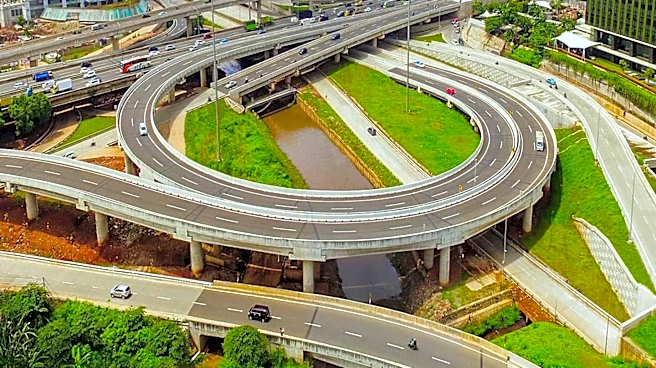
The Arizona Department of Transportation (ADOT) has implemented an innovative construction method by using ultra-lightweight foam glass aggregate in the widening of Interstate 17 north of Phoenix. This material, made entirely from recycled glass, was
deployed at 19 locations along a 23-mile stretch between Anthem Way and Sunset Point. The primary purpose of the foam glass aggregate was to provide a lightweight structural fill over existing drainage culverts. These culverts, originally designed to support only two lanes of traffic, needed to withstand the added weight of new lanes without being crushed. ADOT Communications representative Laura Douglas stated that the material was chosen for its combination of high compressive strength, low weight, and environmental benefits. This marks the first time foam glass aggregate has been used in a state infrastructure project in Arizona.
Why It's Important?
The use of foam glass aggregate in Arizona's I-17 widening project signifies a notable advancement in sustainable infrastructure development within the U.S. By utilizing recycled glass, the project addresses the challenge of managing glass waste, which can be difficult to repurpose into new bottles due to sorting and color issues. This method provides a viable alternative for reusing significant quantities of glass that would otherwise end up in landfills. Economically, it offers a cost-effective solution by avoiding the expensive and time-consuming process of replacing or rebuilding existing culverts. The material's properties, such as its high strength-to-weight ratio and waterproof nature, ensure the long-term stability and safety of the widened highway, which is crucial for a route carrying over one million motorists annually. This approach could serve as a model for other state transportation departments facing similar structural and environmental challenges.
What's Next?
The successful application of foam glass aggregate on I-17 could pave the way for its increased adoption in future U.S. infrastructure projects. Other state transportation departments are likely to observe Arizona's experience, potentially leading to broader implementation of similar lightweight and durable fill materials for various applications, including soft ground stabilization, retaining walls, and bridge supports. The project's success may also encourage further research and development into other sustainable construction materials, fostering innovation in the civil engineering sector. As environmental regulations tighten and the demand for sustainable practices grows, the use of recycled materials like foam glass aggregate is expected to become more commonplace in highway construction and other public works projects across the nation.
Beyond the Headlines
Beyond its immediate practical benefits, the use of foam glass aggregate highlights a broader shift towards circular economy principles in infrastructure development. This approach not only diverts waste from landfills but also reduces the demand for virgin materials, thereby lowering the environmental footprint of large-scale construction. The project underscores the potential for cross-industry collaboration, as waste from municipal recycling programs finds a valuable application in civil engineering. Ethically, it reflects a commitment to environmental stewardship and resource efficiency, demonstrating that large-scale public projects can be executed with ecological considerations in mind. This development could also influence public perception, raising awareness about the potential of recycled materials and encouraging greater participation in recycling initiatives.