



What's Happening?
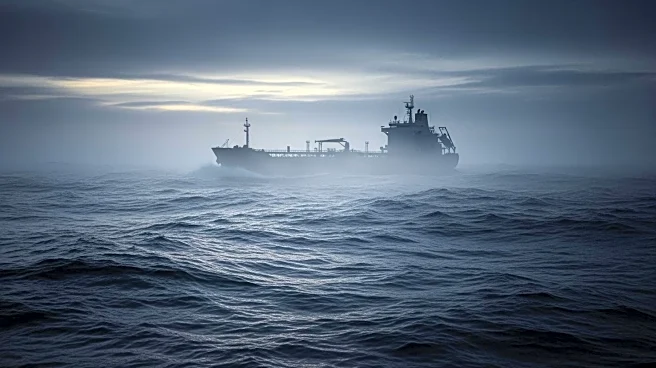
Iran's Islamic Revolutionary Guard Corps has claimed responsibility for an attack on the bitumen tanker Athe Nova, which is currently located off the coast of Khor Fakkan. This incident marks the sixth tanker strike attributed to Iran in a span of two
days, following recent U.S.-Israeli airstrikes on Tehran. The Athe Nova, a Honduran-flagged vessel built in 1998 and managed in the UAE, has a history of serving Iranian energy shipping interests. The tanker exhibited movement behavior consistent with distress or loitering near the Strait of Hormuz prior to the claimed strike. The vessel has been subject to numerous inspections and detentions due to safety issues, including problems with hatches, deck corrosion, and electrical equipment.
Why It's Important?
The attack on the Athe Nova highlights escalating tensions in the region, particularly in the Strait of Hormuz, a critical chokepoint for global oil shipments. The series of strikes attributed to Iran could disrupt maritime trade routes and impact global oil prices, affecting economies worldwide. The incident underscores the ongoing geopolitical conflict involving Iran, the U.S., and Israel, with potential implications for international diplomatic relations and regional stability. Shipping companies and maritime security agencies are likely to increase vigilance and security measures in response to these developments.
What's Next?
In the wake of these attacks, there may be increased military presence and patrols in the region by international forces to ensure the safety of maritime routes. Diplomatic efforts could intensify to de-escalate tensions and prevent further incidents. Shipping companies might reroute vessels or enhance security protocols to mitigate risks. The international community will likely monitor the situation closely, with potential for further sanctions or diplomatic actions against Iran if the attacks continue.