
What's Happening?
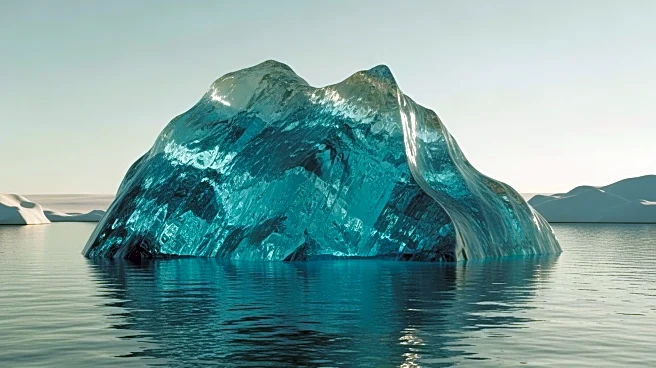
Greenland's vast freshwater reserves, primarily locked in glaciers and ice caps, are increasingly viewed as a strategic asset in the context of global water scarcity. Analysts have noted that water demand
is projected to outpace supply by up to 40% by 2030, driven by climate change and population growth. Greenland, holding about 10% of the world's freshwater, is seen as a potential resource to address these challenges. However, the practicalities of utilizing this 'frozen capital' are complex, with logistical and economic hurdles. Efforts to capitalize on Greenland's meltwater include proposals for dams and premium bottled water exports, though large-scale projects have faced significant obstacles.
Why It's Important?
The growing recognition of water as a strategic asset underscores its critical role in national security and economic stability. As climate change exacerbates water scarcity, countries are increasingly looking to secure reliable water sources. Greenland's reserves represent a potential solution, but the challenges of extraction and transportation highlight the broader difficulties in addressing global water needs. The situation emphasizes the need for innovative water management strategies and technologies, such as desalination and recycling, which are being adopted in regions like the Middle East and Israel. The U.S. and other historically water-abundant nations are now facing new levels of water stress, prompting a reevaluation of their water strategies.
What's Next?
Future developments may include increased investment in water infrastructure and technology to better manage and distribute water resources. Greenland's role as a potential water supplier could evolve, depending on technological advancements and economic feasibility. Additionally, geopolitical dynamics may shift as countries prioritize securing water resources to prevent civil unrest and ensure food security. The international community may also see more collaborative efforts to address water scarcity, potentially leading to new policies and agreements focused on sustainable water management.
Beyond the Headlines
The strategic importance of water is likely to influence geopolitical relations, as countries with limited water resources may seek alliances or investments to secure their supply. The ethical implications of water privatization and commercialization could also become more prominent, raising questions about access and equity. Long-term, the situation may drive innovation in water conservation and efficiency, reshaping industries reliant on water, such as agriculture and manufacturing. The cultural and societal impacts of water scarcity, including potential migration and conflict, could further underscore the need for comprehensive global solutions.