




What's Happening?
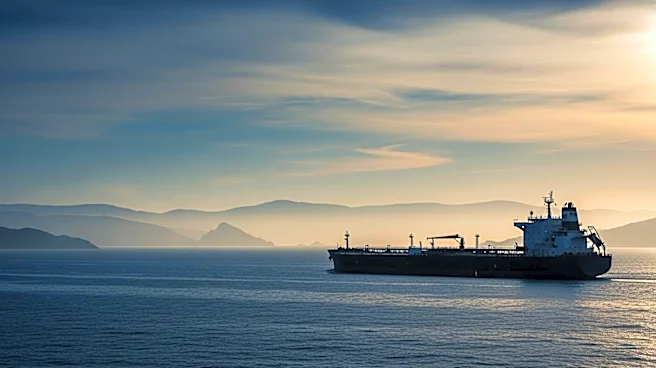
Recent data from Kpler indicates that two crude oil tankers have left the Strait of Hormuz with their trackers turned off, a move reportedly taken to avoid potential Iranian attacks. This trend is part of efforts to maintain Middle East oil exports amid
ongoing regional conflicts. The Basrah Energy, a very large crude carrier (VLCC), loaded 2 million barrels of Upper Zakum Crude from Abu Dhabi National Oil Co and left the strait by May 6. Another VLCC, the Kiara M, also left the Gulf without its transponder on. The exact discharge locations for these tankers remain unclear.
Why It's Important?
The decision to turn off trackers highlights the heightened security risks and operational challenges faced by oil tankers in the region. This development could impact global oil supply chains, as the Strait of Hormuz is a critical passage for oil exports. The lack of transparency in tanker movements may also complicate efforts to monitor and manage oil flows, potentially affecting market stability and pricing.
What's Next?
Continued tensions in the region could lead to more tankers adopting similar measures, further complicating the global oil supply landscape. Stakeholders, including governments and oil companies, may need to enhance security measures and explore alternative routes to ensure the safe transport of oil. Diplomatic efforts to de-escalate tensions and secure maritime routes will be crucial in stabilizing the situation.