





What's Happening?
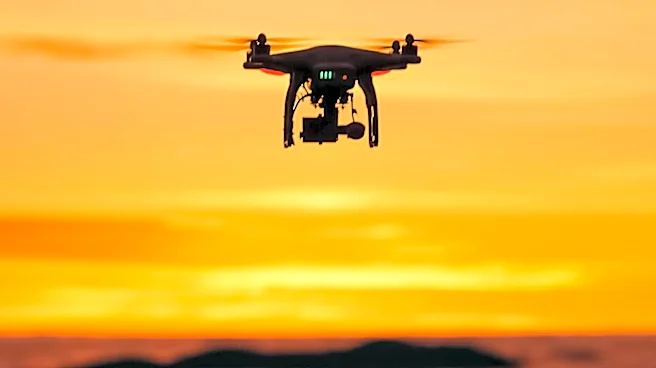
U.S. soldiers and Marines conducted a joint training exercise in South Korea, focusing on the use of small drones equipped with live ordnance. The training took place at the Rodriguez Live Fire Complex and involved the 2nd Infantry Division/ROK-U.S. Combined
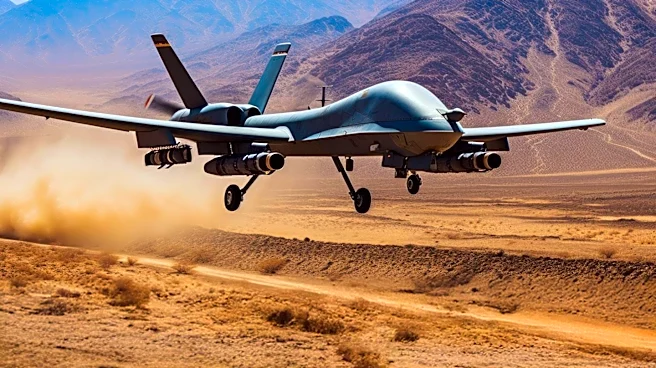
Division. The exercise marked the first time the division used live ordnance with the Neros Archer Strike first-person-view drones. This initiative is part of a broader military strategy to integrate unmanned capabilities into smaller unit formations, allowing them to strike targets independently without relying on higher-echelon assets. The training aims to enhance the tactical flexibility of ground troops by enabling them to support long-range fires up to 20 kilometers. The drones, which have been used in the Russia-Ukraine conflict, are designed for one-way strike missions, intelligence collection, and cargo delivery.
Why It's Important?
The integration of explosive drones into smaller military units represents a significant shift in modern warfare tactics. By equipping ground troops with the ability to conduct independent strikes, the U.S. military enhances its operational flexibility and responsiveness. This capability is crucial in modern combat scenarios where rapid decision-making and execution are vital. The use of drones in this manner could potentially reduce the need for larger, more vulnerable assets and streamline military operations. Additionally, the training reflects the military's adaptation to technological advancements and the evolving nature of warfare, where unmanned systems play an increasingly prominent role.
What's Next?
The successful implementation of this training could lead to further integration of drone technology in military operations. The U.S. military may continue to develop and refine these capabilities, potentially expanding their use in various combat scenarios. Future exercises might focus on enhancing the range, payload capacity, and precision of these drones. Additionally, the military could explore the integration of other advanced technologies, such as artificial intelligence, to further augment the effectiveness of unmanned systems. The ongoing development of these capabilities will likely influence military strategies and doctrines, shaping the future of warfare.