
What's Happening?
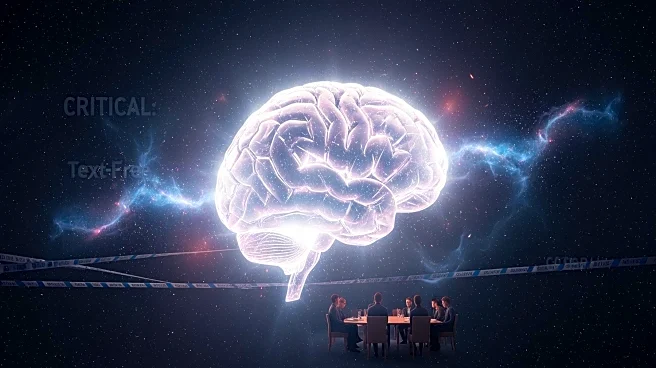
A new study by researchers from the Santa Fe Institute examines the Boltzmann brain paradox, which questions whether our memories and perceptions are genuine or random entropy fluctuations. The study,
published in Entropy, explores the implications of statistical physics on memory reliability and the arrow of time. The researchers argue that many standard arguments about memory and time involve circular reasoning, highlighting the need to separate physical laws from inferential assumptions. The study provides a framework for understanding how assumptions about time and entropy affect our perception of reality.
Why It's Important?
This research is significant as it challenges conventional understanding of memory and time in physics. By disentangling the Boltzmann brain paradox, the study offers insights into the nature of memory and the reliability of our perceptions. It emphasizes the importance of distinguishing between physical laws and assumptions in scientific debates. This could have implications for fields such as cosmology, philosophy, and cognitive science, where understanding the nature of reality and consciousness is crucial.