

What's Happening?
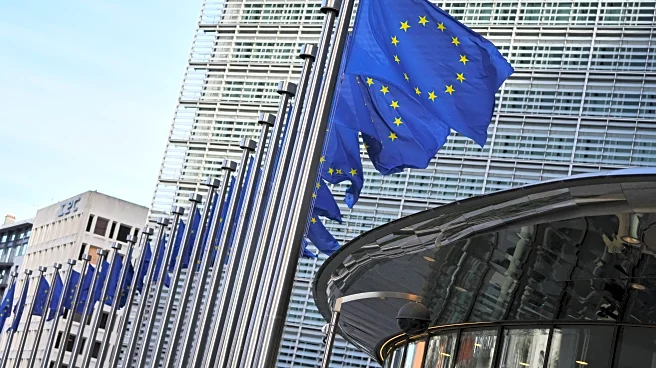
Several European countries are contemplating withdrawing their personnel from a US military-led coordination center in Gaza, citing its failure to enhance aid delivery or achieve political progress. The Civil-Military Coordination Center (CMCC), established
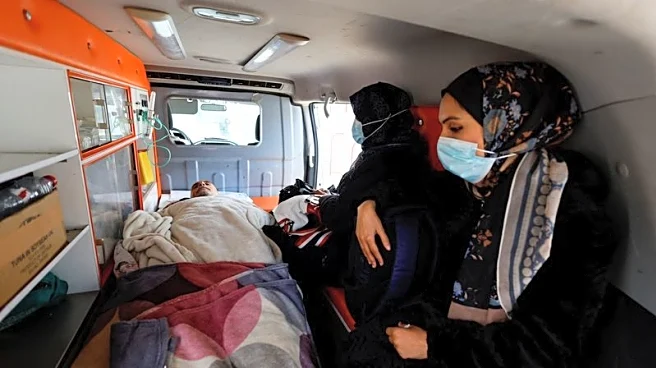
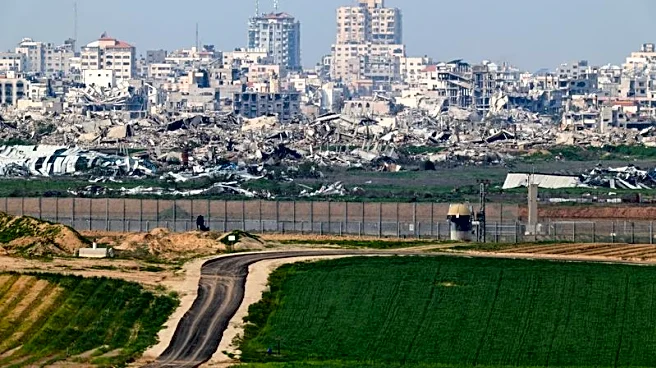
under President Trump's plan to end the Gaza conflict, was intended to monitor the ceasefire, facilitate aid, and develop post-war policies. Despite participation from countries like Germany, France, and the UK, diplomats report dissatisfaction with the center's effectiveness. Concerns include the lack of significant humanitarian aid increase and the center's perceived lack of direction. The CMCC, located near the Gaza border, has not seen a return of some European officials since the holiday season, with some nations questioning its purpose.
Why It's Important?
The potential withdrawal of European nations from the CMCC highlights growing international frustration with the US-led efforts in Gaza. This development could undermine the center's ability to influence post-war policies and aid distribution, potentially leaving Israel with greater control over Gaza's future. The situation underscores the challenges of implementing President Trump's foreign policy strategies, which have faced criticism for their unconventional approaches. The lack of progress in reopening Gaza's border with Egypt and the stalled deployment of a multinational stabilization force further complicate the region's recovery efforts. The European reconsideration reflects broader concerns about the effectiveness of US-led initiatives in conflict zones.
What's Next?
If European countries decide to reduce or cease their involvement in the CMCC, it could lead to a reevaluation of the center's role and effectiveness. The US may need to address these concerns to maintain international support for its Gaza strategy. Additionally, the potential for increased Israeli influence over Gaza's aid and policy decisions could prompt further diplomatic discussions. The future of the CMCC and its impact on Gaza's reconstruction and governance remains uncertain, with the possibility of adjustments to the current strategy to better align with international expectations and humanitarian needs.