







What's Happening?
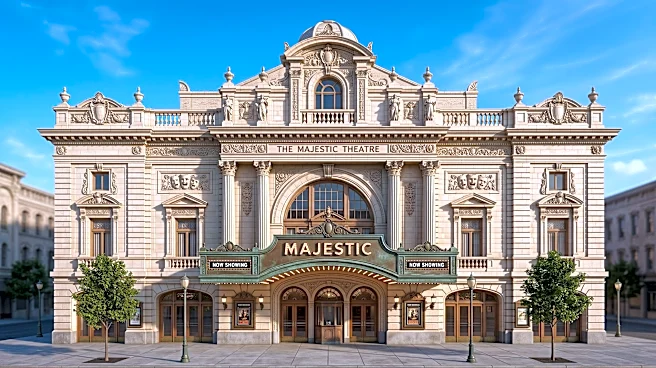
The Los Angeles Conservancy is offering walking tours of L.A.'s historic Broadway Theatre District. This area was once the epicenter for film premieres and still boasts the largest collection of intact historic movie palaces in the country. The tours delve
into the street's history, showcasing how historic venues, such as the former Tower Theatre, have been repurposed—for example, into an Apple store. Participants may also visit other historic movie palaces like the Million Dollar or Orpheum Theatres, though access is subject to availability. The tours are recommended for preservation advocates, music and performance lovers, and photographers interested in the district's ornate facades and stunning interiors.
Why It's Important?
These walking tours are significant for U.S. cultural preservation and urban development. They highlight the ongoing efforts to conserve and adapt historic structures, demonstrating how architectural heritage can be integrated into modern urban life. For U.S. cities facing similar challenges of revitalizing downtown areas, the Broadway Theatre District serves as a case study for successful adaptive reuse. The tours also educate the public, including U.S. residents and tourists, about the rich cinematic and architectural history of Los Angeles, fostering an appreciation for historical preservation and its economic benefits through tourism and renewed commercial activity. This initiative can inspire other U.S. communities to invest in their historical assets.
What's Next?
The Los Angeles Conservancy's continued efforts in promoting and preserving the Broadway Theatre District could lead to increased public and private investment in similar historic preservation projects across the U.S. The success of repurposing historic buildings, such as the Tower Theatre into an Apple store, might encourage more businesses to consider historic locations for their operations, blending modern commerce with cultural heritage. This could also spur other U.S. cities to develop their own historic walking tours and preservation programs, leveraging their unique architectural legacies to attract tourism and foster community pride. The model could also influence urban planning policies to prioritize adaptive reuse over demolition in historic areas.
Beyond the Headlines
Beyond the immediate historical and architectural appreciation, these tours touch upon deeper themes of urban identity and the cyclical nature of city life. The transformation of grand movie palaces into contemporary commercial spaces or performance venues reflects a continuous evolution of urban centers. It highlights the challenge of balancing preservation with progress, and the importance of finding new purposes for old structures to ensure their survival. The tours also serve as a reminder of the cultural significance of these spaces, which once served as communal hubs for entertainment and social gathering, and how their continued existence, even in altered forms, maintains a connection to a city's past and its collective memory.