




What's Happening?
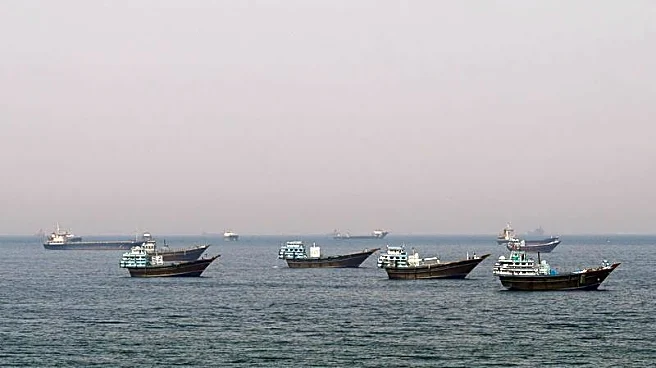
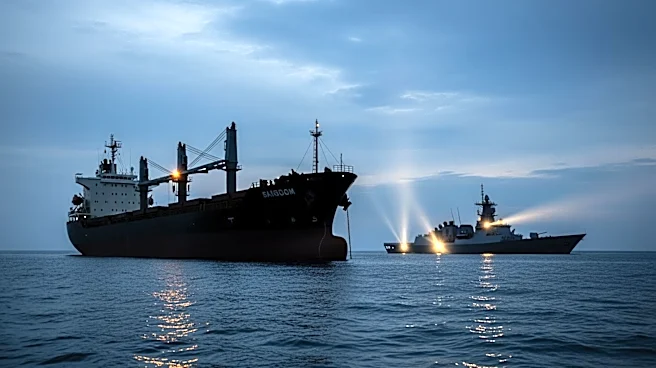
Shipping traffic through the Strait of Hormuz remains mostly halted, with only three ships passing in the last 24 hours. A U.S. blockade of Iranian ports has led to Iranian restrictions on the strait, which typically handles a significant portion of the world's
oil and LNG supply. The situation has left hundreds of ships and 20,000 seafarers stranded. Recent attempts to navigate the strait have been met with threats and shots fired by Iranian forces. A ceasefire between the U.S. and Iran is in jeopardy, with military planners from over 30 countries set to meet in London to discuss reopening the strait.
Why It's Important?
The halt in shipping through the Strait of Hormuz has significant implications for global energy markets, as the strait is a critical chokepoint for oil and LNG transport. The disruption could lead to increased energy prices and supply chain challenges worldwide. The situation also highlights geopolitical tensions in the region, with potential impacts on international relations and security. The involvement of multiple countries in discussions to reopen the strait underscores the global importance of maintaining open and secure shipping lanes.
What's Next?
Military planners from over 30 countries will meet in London to discuss plans to reopen the Strait of Hormuz. The talks aim to translate diplomatic consensus into a joint plan to ensure freedom of navigation and support a lasting ceasefire. The outcome of these discussions could determine the future of shipping in the region and the stability of global energy markets.