
What's Happening?
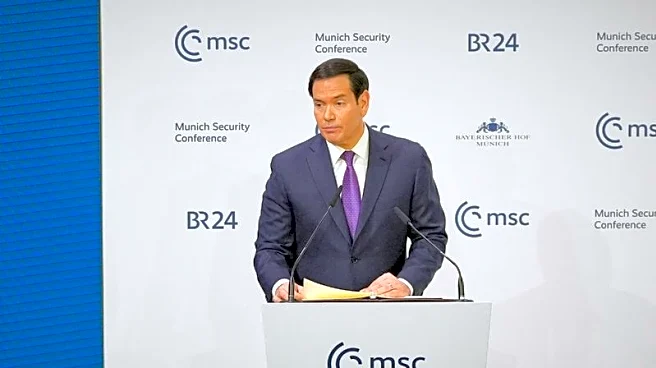
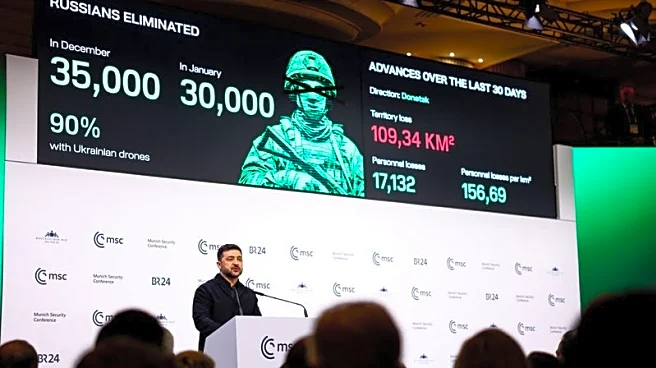
French President Emmanuel Macron addressed the Munich Security Conference, urging global leaders to take cues from Europe rather than criticize it. This comes amid ongoing tensions with Russia over its
invasion of Ukraine. Macron emphasized the need for a unified European stance in dealing with Russia, even if a peace deal is reached. He highlighted the importance of establishing rules to prevent further escalation. The conference also saw discussions on military aid to Ukraine, with Britain and its allies pledging significant support. Additionally, Germany's intelligence chief warned of potential Russian interference in upcoming elections, reflecting broader concerns about Russia's influence in Europe.
Why It's Important?
Macron's call for unity and leadership from Europe is significant as it underscores the continent's role in global security and diplomacy. The ongoing conflict in Ukraine has strained international relations, and Europe's response could set a precedent for handling similar crises. The emphasis on military aid and sanctions against Russia highlights the geopolitical stakes involved. For the U.S., Europe's stance could influence transatlantic relations and cooperation on security issues. The potential for Russian interference in elections also raises concerns about the integrity of democratic processes in Europe, which could have broader implications for global democracy.
What's Next?
The Munich Security Conference is expected to continue discussions on strengthening Europe's defense capabilities and addressing the Russian threat. Macron's call for unity may lead to increased collaboration among European nations and with the U.S. on security matters. The potential for a peace deal with Russia remains uncertain, and Europe's approach will be crucial in shaping future diplomatic efforts. Additionally, the warning of election interference may prompt European countries to enhance their cybersecurity measures and election integrity protocols.