



What's Happening?
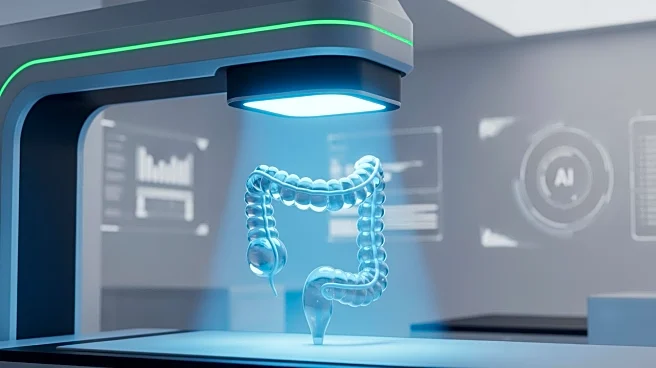
Privia Health, in collaboration with Amalgam Rx, Inc. and Exact Sciences Corp., has successfully increased colorectal cancer (CRC) screening rates to 84% through an AI-powered program. This initiative, documented in a Privia Health case study, utilized
EHR-integrated workflows and proactive patient outreach to surpass the National Colorectal Cancer Roundtable's 80% screening goal. The program, launched in 2023 and expanded nationally in 2024, combined Amalgam's clinical decision support with Exact Sciences' Cologuard® test, offering a noninvasive screening option for eligible patients aged 45 and older. The program engaged over 42,000 patients initially, scaling to reach more than 100,000 patients nationwide. It processed approximately 23,000 CRC screening orders within 48 hours, identifying over 550 patients requiring diagnostic follow-up.
Why It's Important?
This program highlights the potential of AI-driven healthcare solutions to improve preventive care outcomes significantly. By integrating technology into clinical workflows, Privia Health has demonstrated a scalable model for increasing cancer screening rates, which is crucial for early detection and treatment. The success of this initiative underscores the importance of data-driven approaches in closing screening gaps and enhancing patient engagement. It also supports value-based care objectives by improving patient identification and documentation quality, positioning health systems for future digital quality measurement requirements. The program's ability to reduce administrative burdens while increasing screening rates could serve as a model for other preventive care initiatives.
What's Next?
Privia Health plans to apply insights from the CRC screening program to other preventive care initiatives, focusing on scalable, data-driven patient engagement and quality improvement strategies. The continued collaboration with Amalgam Rx and Exact Sciences may lead to further innovations in healthcare delivery, potentially expanding the use of AI-powered solutions across different medical conditions. As the program evolves, it may influence policy discussions on the integration of AI in healthcare, encouraging more health systems to adopt similar approaches to enhance preventive care and patient outcomes.