




What's Happening?
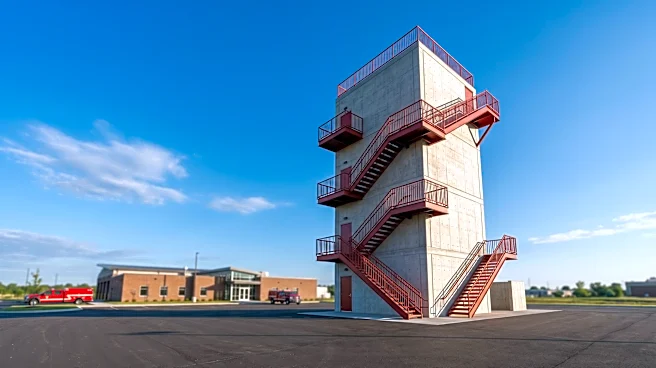
The Pinellas Park Fire Department in Florida has constructed a new four-story training tower behind Fire Station 35. This facility is designed to provide firefighters with easier access to hands-on training for various emergency scenarios, particularly
those encountered in multi-story buildings like condos and apartments. The tower features eight burn rooms, allowing crews to practice navigating obstacles and pulling hose lines in simulated real-world conditions. Previously, the department had to rely on facilities at St. Petersburg College or other fire stations, which required extensive scheduling. Officials state that this new, readily accessible training resource will be crucial for both recruitment and retention efforts, addressing a statewide firefighter shortage that the Florida Fire Chiefs’ Association and the Florida State Fire Marshal identified in 2023. Lieutenant Bradley Rogers and Division Chief of Training T.J. Layfield emphasized the tower's role in enhancing skills and preparing firefighters for calls.
Why It's Important?
The opening of the new training tower in Pinellas Park is a significant development in addressing the critical firefighter shortage faced by Florida and many other U.S. states. By providing readily accessible, high-quality training facilities, the department aims to improve both the skills of its current personnel and its attractiveness to potential recruits. The ability to simulate realistic emergency scenarios, such as navigating burn rooms and pulling hose lines through obstructed spaces, is vital for ensuring firefighters are well-prepared for the complex challenges of urban firefighting. This investment in local training infrastructure can lead to more effective emergency responses, ultimately enhancing public safety. Furthermore, the facility's availability to other departments in Pinellas County signifies a collaborative approach to regional emergency preparedness, potentially elevating the overall standard of firefighting capabilities across the county. This initiative could serve as a model for other communities grappling with similar workforce and training challenges.
What's Next?
With the new training tower now operational, the Pinellas Park Fire Department will intensify its hands-on training programs, allowing firefighters to regularly hone their skills in realistic scenarios. The facility's availability to other departments in Pinellas County suggests a potential increase in regional training collaborations, which could standardize and improve emergency response capabilities across the area. The department anticipates that this enhanced training infrastructure will positively impact recruitment and retention efforts, helping to alleviate the ongoing firefighter shortage. Officials will likely monitor the effectiveness of the tower in attracting new talent and retaining experienced personnel. The success of this initiative could influence other fire departments in Florida and beyond to invest in similar localized, advanced training facilities to address their own workforce challenges and improve public safety outcomes.
Beyond the Headlines
The Pinellas Park Fire Department's investment in a new training tower reflects a deeper national challenge: the evolving demands on first responders and the need for continuous, specialized training in an increasingly complex environment. Beyond the immediate benefit of improved skills, such facilities contribute to the professionalization of the firefighting career, potentially boosting morale and reducing burnout by providing resources for mastery and growth. The statewide firefighter shortage, attributed to demographic changes, generational ideologies, and mental health concerns, points to systemic issues within public service professions. This local solution in Pinellas Park highlights the importance of community-level initiatives in addressing broader workforce crises. It also underscores the ethical imperative to equip emergency personnel with the best possible training to ensure their safety and the safety of the public they serve, especially as urban environments become denser and emergency situations more varied.