





What's Happening?
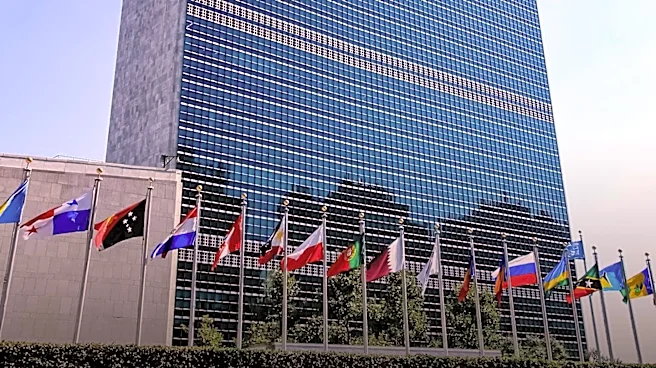
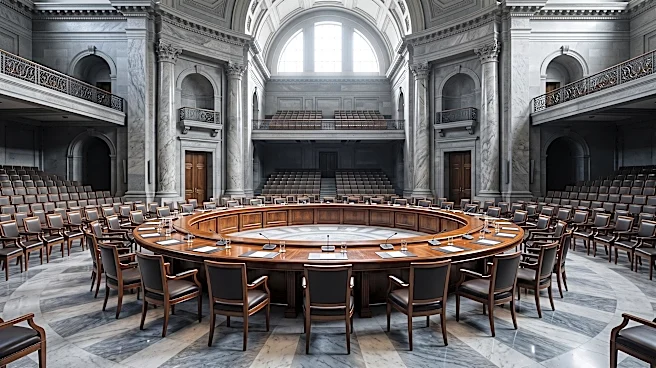
Sanita Pavļuta-Deslandes of Latvia, serving as the President of the UN Security Council for November, has outlined the month's agenda, emphasizing several key priorities. Latvia's presidency will focus on ensuring the Council responds effectively to the impact
of conflict on civilians, promoting women's participation in political and peace processes, and addressing how emerging threats affect global peace and security. A signature event scheduled for November 24 will be a high-level meeting on 'conflict resolution in an era of rapid technological change.' Additionally, the Council will address mandate renewals for peacekeeping missions in the Central African Republic (MINUSCA) and Abyei (UNISFA), as well as sanctions regimes concerning Yemen and Al-Shabaab. Discussions on Ukraine are also expected to be a regular feature of the month's proceedings.
Why It's Important?
Latvia's agenda for the UN Security Council presidency highlights critical global challenges that have significant implications for international stability and U.S. foreign policy. The focus on civilian protection in conflict zones aligns with U.S. humanitarian concerns and efforts to uphold international law. Promoting women's participation in peace processes is a recognized strategy for more sustainable peace, resonating with U.S. initiatives on gender equality and security. The discussion on technological change in conflict resolution is particularly relevant given the evolving nature of warfare and cybersecurity threats, areas where the U.S. has substantial interests. The mandate renewals for peacekeeping missions and sanctions regimes directly impact regional stability in Africa and the Middle East, regions where the U.S. has strategic security interests and provides significant aid.
What's Next?
Throughout November, the UN Security Council will proceed with its outlined agenda, including scheduled meetings, briefings, and votes on mandate renewals. The signature event on November 24, focusing on technology and conflict resolution, is expected to draw high-level participation and could lead to new frameworks or approaches in this area. Regular discussions on Ukraine will continue, reflecting ongoing international concern and efforts to find a resolution. The Council will also continue its process for selecting the next Secretary-General, with further straw polls anticipated. Member states will engage in debates and negotiations on various resolutions, with outcomes potentially influencing peacekeeping operations, humanitarian aid, and diplomatic efforts in several conflict-affected regions.
Beyond the Headlines
Latvia's emphasis on technological change in conflict resolution points to a growing recognition within international bodies of the dual-use nature of technology and its profound impact on global security. This includes not only the use of advanced weaponry but also the role of information warfare, cyberattacks, and artificial intelligence in modern conflicts. Addressing these issues requires a nuanced understanding and potentially new international norms and regulations, which could be a long-term undertaking. Furthermore, the consistent focus on civilian protection and women's roles in peace processes reflects an evolving understanding of comprehensive security, moving beyond traditional state-centric approaches to include human security dimensions. The challenges of achieving consensus on these complex issues within the Security Council, particularly among its permanent members, will continue to shape the effectiveness of international responses.