
What's Happening?
The Peace and Security Council (PSC) of the African Union (AU) is scheduled to convene its 1378th meeting as an open session on 'Climate, Peace and Security in Africa: Emerging Challenges, Institutional Responses and Future Priorities' on November 11.
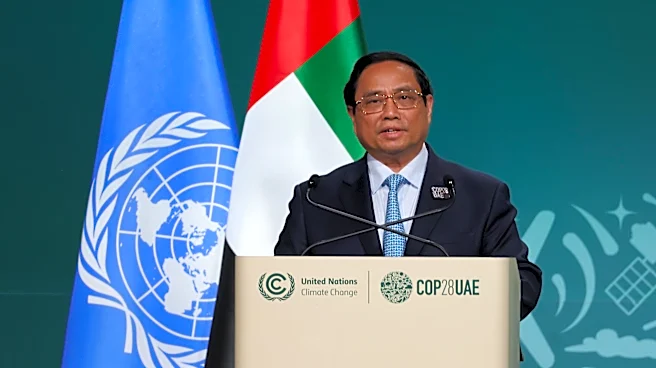
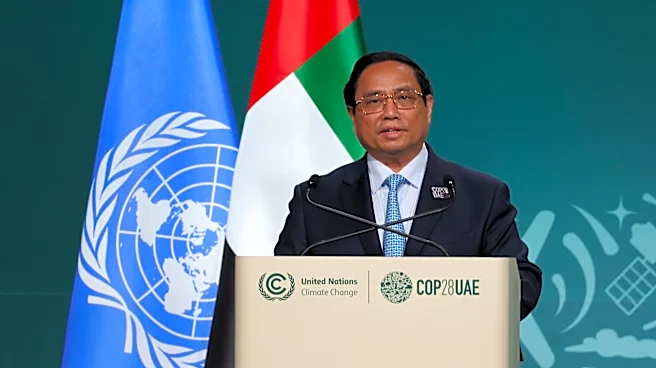
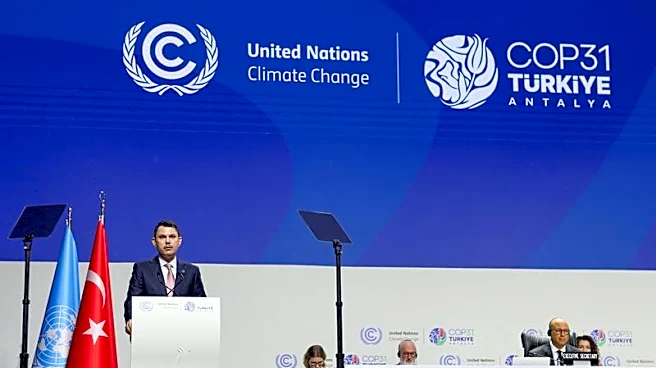
This session coincides with the opening of the 31st Conference of the Parties (COP31) to the United Nations Framework Convention on Climate Change (UNFCCC) in Antalya, Turkey. The PSC's engagement follows a series of AU decisions to develop a Common African Position on Climate Change, Peace and Security (CAP-CPS). The session will discuss how climate change acts as a risk multiplier, intensifying existing political, socio-economic, and governance vulnerabilities. It will also address the persistent gap between Africa's climate-financing needs and available resources, calling for scaled-up, predictable, accessible, and grant-based financing, particularly for fragile and conflict-affected countries.
Why It's Important?
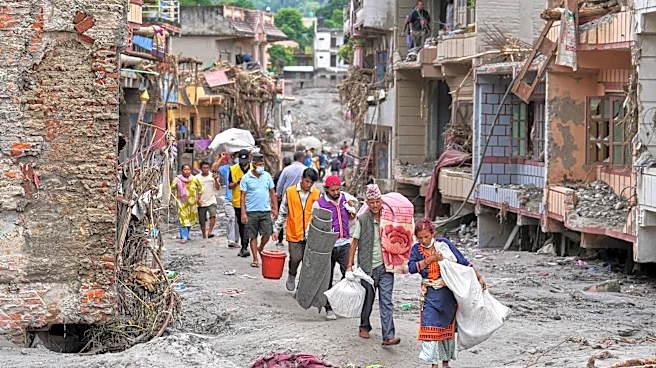
The AU PSC's focus on the climate-peace and security nexus is critically important for understanding and addressing the complex challenges faced by African nations, which have significant implications for global stability. Climate change in Africa is not merely an environmental issue; it is a threat multiplier that exacerbates existing conflicts, displaces populations, and undermines governance, creating conditions that can foster extremism and instability. For the U.S., understanding these dynamics is crucial for its foreign policy, security interests, and humanitarian aid efforts. The call for increased climate finance, especially for fragile states, highlights the need for developed nations to fulfill their commitments to support adaptation and mitigation in vulnerable regions. Addressing these issues can prevent future crises, promote regional stability, and contribute to broader international security.
What's Next?
The outcome of the PSC session is expected to be a communiqué reaffirming that climate change acts as a risk multiplier and welcoming progress towards finalizing the CAP-CPS. The Council may reiterate the importance of Member State ownership, inclusive national consultations, and data-driven analysis for the CAP-CPS. It is also expected to call for practical measures to mainstream climate considerations into conflict prevention and peacebuilding, including integrating climate-related conflict indicators into early warning systems. The PSC will likely stress the need for scaled-up, predictable, and accessible climate financing for Africa, particularly for fragile and conflict-affected countries. These discussions will feed into the broader COP31 negotiations, aiming to ensure that climate-peace and security considerations are integrated into Africa's climate policy processes and international engagements.
Beyond the Headlines
The AU PSC's initiative delves into the profound ethical and practical dimensions of climate change as a security threat. It challenges the traditional separation of environmental and security policies, advocating for an integrated approach that recognizes the interconnectedness of climate impacts, peace, and human well-being. The debate over the CAP-CPS's scope, particularly whether it should focus on a common position for international advocacy or an operational framework for national action, reflects the broader tension between global and local responsibilities in addressing climate change. This effort also highlights the critical need for data-driven analysis and robust institutional frameworks to effectively manage climate-induced security risks, emphasizing the importance of proactive measures over reactive interventions.