







What's Happening?
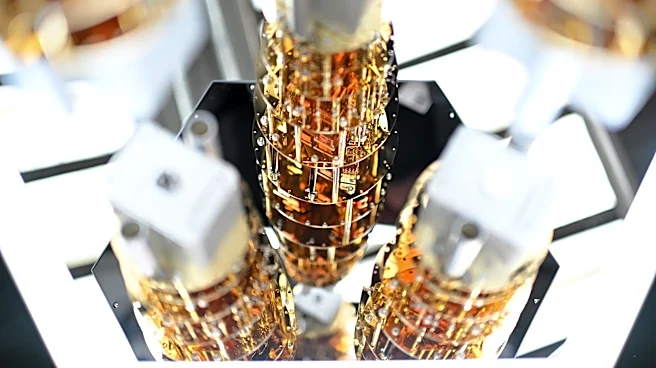
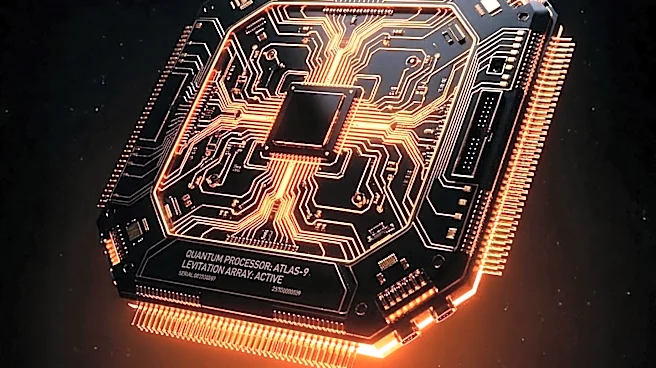
Rigetti Computing, Inc. has announced its financial results for the third quarter ended September 30, 2026, alongside significant technological milestones. The company reported achieving 99.5% median two-qubit fidelity on its 108-qubit Cepheus-1-108Q
system, validating its chiplet-based architecture for scaling superconducting quantum computers. This system is composed of twelve interconnected 9-qubit chiplets. Rigetti also secured a definitive agreement with the U.S. Department of Commerce for up to $100 million in funding under the CHIPS Research and Development Office Broad Agency Announcement, part of the CHIPS Act. This funding will support three key research and development programs: miniaturized readout electronics, expanded cryogenic capacity through a new cryostat architecture, and fabrication capabilities for high-connectivity chip architectures. As a condition of the award, the Department of Commerce received a minority, non-controlling equity stake in Rigetti.
Why It's Important?
Rigetti's achievement of high fidelity on a 108-qubit system is a critical step towards building more powerful and reliable quantum computers. High fidelity is essential for reducing errors in quantum computations, which is a major hurdle in the development of practical quantum applications. The validation of their chiplet-based architecture demonstrates a viable path for scaling quantum processors to higher qubit counts. The $100 million funding from the U.S. CHIPS Act underscores the U.S. government's strategic investment in domestic quantum technology development. This financial support is vital for accelerating research and development in key areas like miniaturized electronics and advanced cryogenic systems, which are fundamental to the performance and scalability of quantum hardware. This investment not only boosts Rigetti's capabilities but also strengthens the U.S.'s position in the global quantum computing race, fostering innovation and potentially creating high-tech jobs within the country.
What's Next?
Rigetti's immediate plans include targeting a 300-plus-qubit system with approximately 99.7% median two-qubit gate fidelity and gate speeds below 60 nanoseconds by mid-2028. This next-generation system is expected to feature a larger qubit count per chiplet, faster readout, and expanded cryogenic capacity. The company also aims for systems with approximately 1,000 qubits, 99.9% two-qubit gate fidelity, and gate speeds below 50 nanoseconds within approximately three years, believing this combination could enable quantum advantage. The CHIPS Act funding will directly support these roadmap objectives by advancing critical hardware components. Rigetti plans to increase the density of qubits in a single fridge for its 1,000+ qubit system, rather than networking multiple fridges, to achieve higher performance at lower cost. The company will continue investing in dilution refrigeration capacity and related infrastructure to support these higher-qubit-count systems.
Beyond the Headlines
The U.S. government's investment through the CHIPS Act in companies like Rigetti highlights a broader national strategy to secure leadership in advanced technologies. Beyond the immediate technical advancements, this funding signifies a commitment to building a robust domestic supply chain and research ecosystem for quantum computing, reducing reliance on foreign technologies. The Department of Commerce's equity stake, while non-controlling, indicates a vested interest in the long-term success and strategic direction of these critical technology firms. This public-private partnership model could become a blueprint for fostering innovation in other strategic sectors. The ethical implications of quantum computing, particularly in areas like cryptography and artificial intelligence, will become increasingly prominent as these technologies mature, necessitating ongoing policy discussions and regulatory frameworks to ensure responsible development and deployment.