





What's Happening?
The Princeton University Art Museum has reopened after a five-year renovation, featuring Charles Willson Peale's painting 'George Washington at the Battle of Princeton.' This artwork, commissioned in 1783, has been part of the museum's collection for
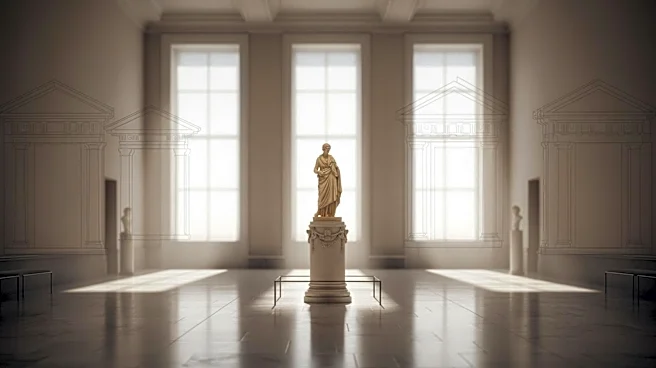
over two centuries. The painting, once a straightforward celebration of American ideals, is now presented with a focus on the complexities and contradictions of the early republic. The museum aims to highlight the tensions between the founding ideals and the historical realities, such as Washington's ownership of enslaved people and his actions against Native Americans. The painting is displayed alongside busts that further explore these themes, inviting viewers to reflect on the multifaceted legacy of Washington.
Why It's Important?
This reframing of historical art reflects a broader national conversation about the complexities of American history and its founding figures. By acknowledging the contradictions in Washington's legacy, the museum encourages a more nuanced understanding of American history. This approach can influence how historical narratives are taught and understood, potentially impacting educational curricula and public discourse. The exhibition also underscores the importance of art in shaping and challenging historical narratives, highlighting the role of cultural institutions in fostering critical reflection on national identity.
What's Next?
The reopening of the museum and the reframing of this iconic painting may inspire other institutions to reevaluate how they present historical artifacts. This could lead to a broader movement within museums and educational institutions to address historical complexities more openly. Additionally, the exhibition may prompt discussions among historians, educators, and the public about how to balance celebration and critique in the portrayal of national history.
Beyond the Headlines
The exhibition raises questions about the role of art in historical memory and the ethical responsibilities of cultural institutions. By presenting a more complex narrative, the museum challenges visitors to engage with history critically, potentially influencing public perceptions of national identity and historical figures. This approach may also contribute to ongoing debates about the representation of history in public spaces and the importance of diverse perspectives in historical narratives.