








What's Happening?
The Trump administration's fiscal 2027 budget request for the Pentagon, totaling $1.5 trillion, significantly increases spending across various military priorities. However, U.S. Army Aviation is notably excluded from this boost, with its procurement
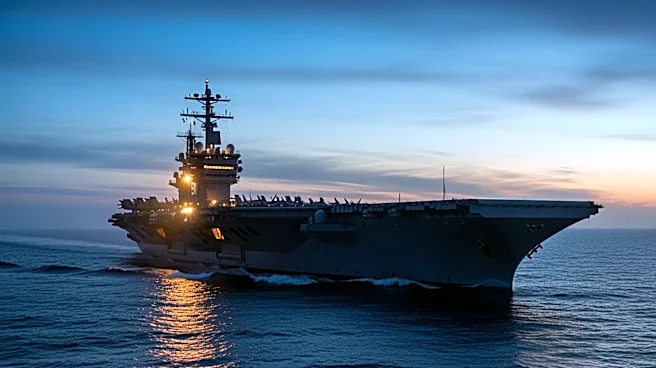
budget set to decrease by more than half, from $4.065 billion in 2026 to $1.93 billion in 2027. This marks the third consecutive year of budget cuts for Army Aviation, following previous cancellations and reductions in modernization programs. The Navy, in contrast, sees a substantial increase in its aircraft procurement budget, rising to $34.4 billion. The Army's focus remains on the Bell MV-75 'Cheyenne II,' which is prioritized in the aviation research and development budget, receiving $2.14 billion for fiscal 2026.
Why It's Important?
The reduction in Army Aviation's budget could have significant implications for the U.S. military's operational capabilities and modernization efforts. The cuts may hinder the Army's ability to maintain and upgrade its aviation fleet, potentially affecting readiness and strategic flexibility. The focus on the Bell MV-75 'Cheyenne II' suggests a shift in priorities towards new technologies, but the limited procurement of existing platforms like the UH-60 Black Hawk and Boeing CH-47 Chinook could impact current operational capabilities. The disparity in budget allocations between the Army and Navy highlights potential strategic shifts within the Pentagon, possibly affecting inter-service dynamics and future military planning.
What's Next?
The full fiscal 2027 budget request will be publicly presented on April 21, providing further details and justifications for the proposed changes. Stakeholders, including Congress and military leaders, may respond to the budget cuts with calls for adjustments or additional funding to support Army Aviation. The Army's strategy to balance the introduction of the MV-75 with the maintenance of existing platforms will be closely scrutinized. The outcome of these budget decisions could influence future procurement strategies and the overall direction of U.S. military aviation capabilities.